Key aspects of emotional regulation
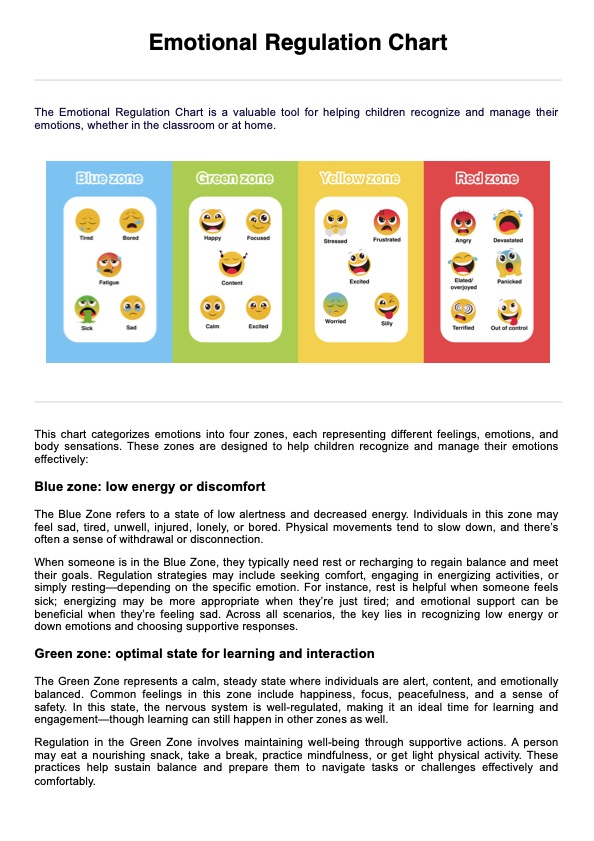
Understanding the zones of regulation is essential for building effective self-awareness and self-regulation skills in children. These zones categorize emotional responses into four color-coded states, each reflecting specific body sensations, energy levels, and behavioral patterns.
By using this framework, healthcare practitioners can more easily teach kids to recognize different emotions, apply coping skills, and use targeted behavior strategies. Here are the key aspects of emotional regulation according to Kuypers (2023):
Blue zone
The blue zone represents low-energy emotional states such as sadness, fatigue, or physical discomfort. Children in this zone may feel disengaged, withdrawn, or unwell. Recognizing the blue zone promotes mindful awareness of body sensations and emotional needs. Practitioners can support children by encouraging sensory relaxation, offering quiet spaces, or guiding brief check-ins. Strategies such as rest, comforting sensory tools, or calm music help restore emotional balance. The goal is to build self-awareness and re-engagement by teaching effective coping skills and reinforcing the importance of seeking emotional support when feeling low.
Green zone
The green zone indicates an ideal emotional state for learning, play, and social interaction. It reflects balance, focus, and calm, where positive communication and self-regulation skills are most accessible. In this zone, children demonstrate emotional readiness to engage in tasks, cooperate with others, and maintain controlled excitement. Clinicians should encourage behaviors reinforcing the green zone—such as consistent routines, peer collaboration, and emotional check-ins—to improve emotional regulation. Maintaining this state builds confidence and strengthens behavior management tools. Recognizing the green zone also allows children to reflect on what helps them feel emotionally grounded.
Yellow zone
The yellow zone reflects elevated arousal and emotional tension—feelings like nervousness, unease, or overstimulation. Children in this state may experience trouble concentrating or risk escalation into the red zone if unchecked. Practitioners should focus on mindful awareness and early intervention using strategies like breath control, movement breaks, or quiet time to help regulate arousal. This is a critical moment to teach kids how to self-monitor rising tension and apply proactive coping skills. Identifying triggers and using behavior strategies early can prevent emotional escalation and reinforce adaptive emotional responses in challenging situations.
Red zone
The red zone signifies intense emotions such as anger, fear, or frustration, often leading to reactive or dysregulated behavior. Children in this state may lose control, requiring immediate intervention focused on anger management and grounding techniques. Healthcare practitioners should prioritize body-based strategies like breath control, safe physical activity, or access to a calming space. It’s important to respond with consistency and empathy, helping the child regain self-regulation without reinforcing negative behaviors. Over time, structured support within this zone builds resilience and increases the child’s capacity to manage emotional intensity safely and effectively.