



What is Trauma and PTSD?
Trauma is the emotional response triggered by a distressing or life-threatening event that exceeds an individual's capacity to cope. It can trigger feelings of helplessness, reduce one's sense of self, and impair the ability to experience a full range of emotions. This can include experiences such as serious accidents, natural disasters, or exposure to war and violence.
Post-Traumatic Stress Disorder (PTSD) is a psychiatric disorder that may develop in individuals who have experienced or witnessed traumatic events. These events could be natural disasters, serious accidents, terrorist acts, war/combat, or situations where they have been threatened with death, sexual violence, or serious injury. Symptoms like flashbacks, nightmares, severe anxiety, and intrusive thoughts about the traumatic event source characterize PTSD.
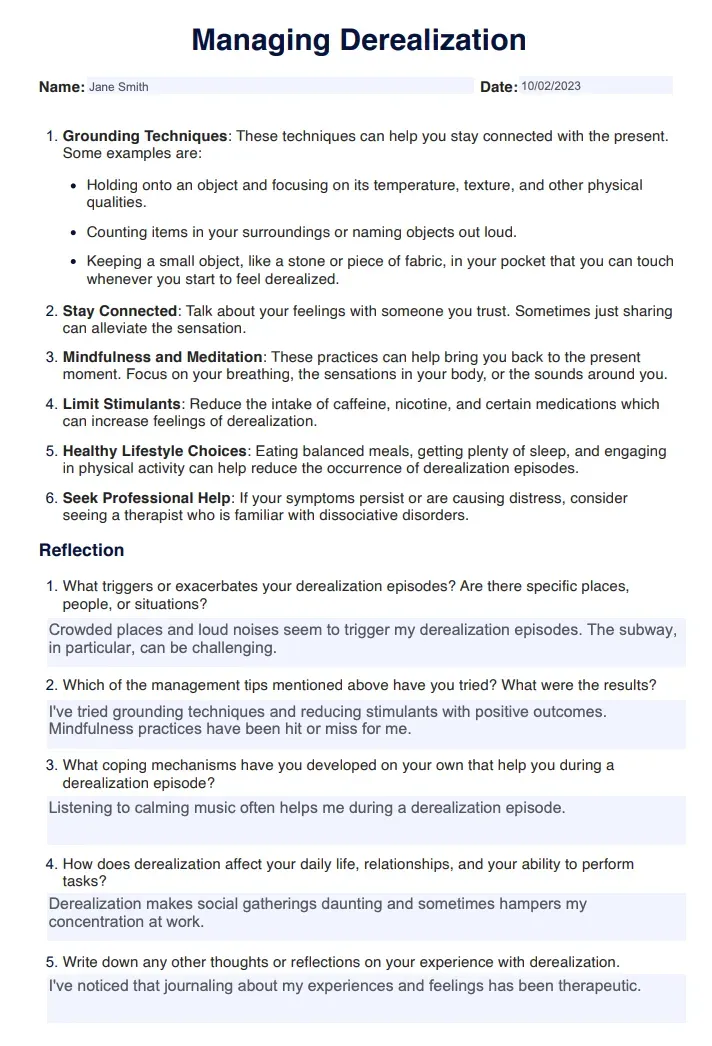
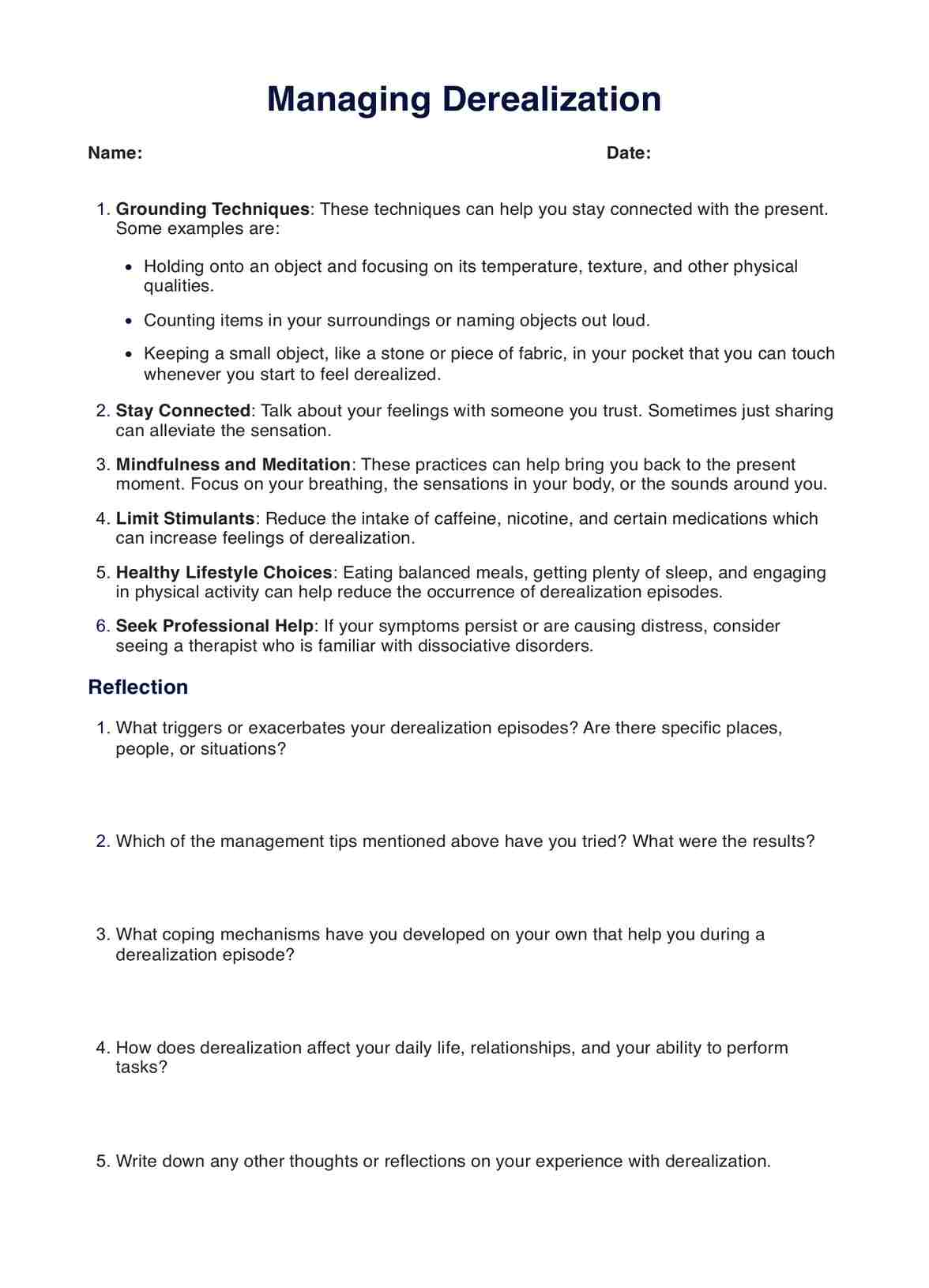
Derealization is a potential symptom of PTSD. It is a subjective experience of unreality in oneself or the outside world. Individuals experiencing derealization may feel detached from their surroundings or themselves as if they are observers of their own lives rather than active participants. This disconnection can make the world seem unreal or distorted, leading to disorientation and distress.
Continual research and understanding of PTSD and its related symptoms, such as derealization, are critical for developing effective treatment strategies. For more information about managing and treating PTSD, you can refer to our comprehensive PTSD resources.