









What are SLAP lesions?
SLAP lesions, or Superior Labrum Anterior and Posterior lesions, are injuries to the superior labrum of the shoulder joint. The labrum is a ring of cartilage that surrounds the glenoid cavity, providing stability to the shoulder by securing the ball of the humerus in the socket. A SLAP tear occurs at the point where the biceps tendon attaches to the labrum, often resulting from repetitive shoulder motions or acute trauma. This type of labral pathology can significantly impair shoulder function and cause pain.
How to assess SLAP lesions
Assessing SLAP lesions involves a series of clinical evaluations and diagnostic tests to accurately identify the presence and extent of the injury. Here are the key steps and methods used to assess SLAP lesions:
- Patient history and symptoms: Begin by taking a thorough patient history, focusing on any incidents of shoulder trauma, repetitive overhead activities, and symptoms such as pain, clicking, or a feeling of instability in the shoulder.
- Physical examination: Conduct a detailed physical examination of the shoulder to check for tenderness, range of motion, and strength. Look for signs of discomfort during specific movements.
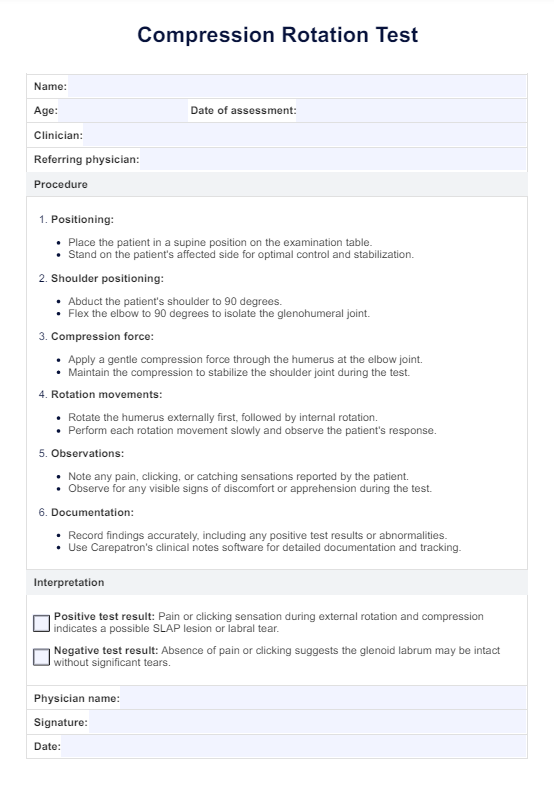
- Compression Rotation Test: A positive test, indicated by pain or clicking, suggests a potential SLAP tear. The procedure for this can be found in our template and in a previous section of this guide.
- Crank test: Another useful test is the crank test, where the shoulder is elevated to 160 degrees and a compressive load is applied while rotating the humerus. Pain or a grinding sensation indicates superior labral tears.
- O'Brien’s test: This test involves the patient flexing their shoulder to 90 degrees with the elbow extended and then internally rotating the arm. The examiner applies downward force; pain or a click in this position can indicate a torn labrum.
- Magnetic resonance imaging (MRI): An MRI scan provides detailed images of the shoulder's internal structures, helping to confirm the presence and severity of a SLAP lesion.
- Arthroscopy: In some cases, an arthroscopic examination may be necessary. This minimally invasive procedure allows direct visualization of the superior labrum and can confirm the diagnosis of a SLAP tear.
By following these steps, healthcare practitioners can accurately assess SLAP lesions and determine the most appropriate treatment plan for their patients.









