




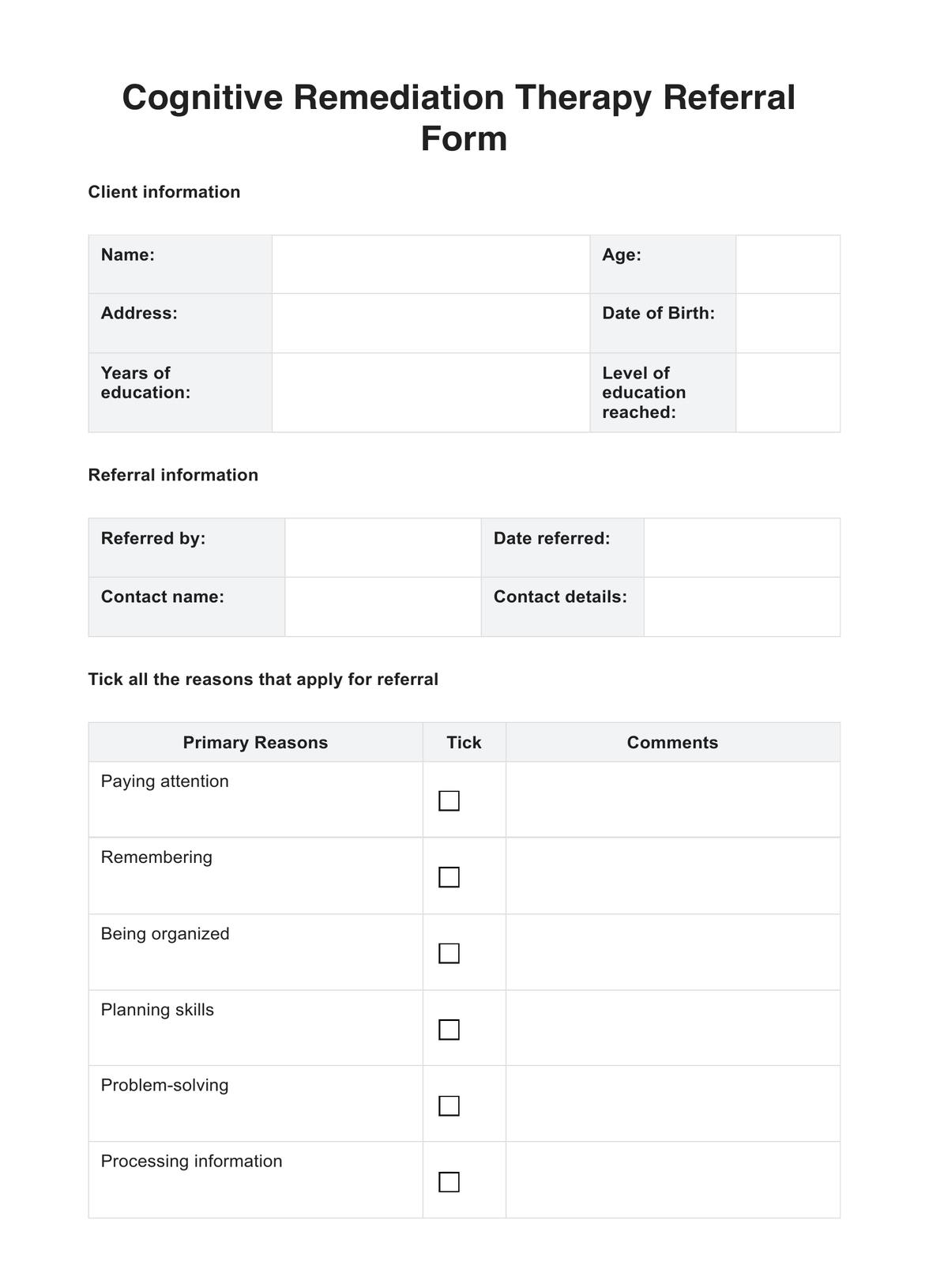




What is Cognitive Remediation Therapy?
Cognitive Remediation Therapy (CRT) is a specialized therapeutic approach designed to address cognitive deficits commonly experienced by individuals with various neurological or psychiatric conditions. It is an evidence-based intervention focusing on improving cognitive functioning, enhancing daily functioning, and ultimately promoting a better quality of life for patients.
CRT employs a structured and systematic training program that targets specific cognitive domains, such as attention, memory, executive functions, and problem-solving skills. By utilizing a combination of computer-based exercises, group activities, and individualized training sessions, CRT aims to stimulate neuroplasticity and facilitate the development of compensatory strategies.
The therapy begins with a comprehensive assessment to identify the specific cognitive difficulties of each patient. This assessment helps tailor the therapy to meet the individual needs and challenges of the patient. Progress is regularly monitored throughout the therapy, allowing for adjustments and modifications to optimize outcomes.
One of the key principles of CRT is the transfer of skills learned during therapy to real-life situations. Therapists work closely with patients to help them generalize the newly acquired cognitive strategies and apply them in their day-to-day activities. Patients can regain independence, improve work or academic performance, and enhance social interactions.
Research studies have demonstrated CRT's effectiveness in various populations, including individuals with traumatic brain injury, stroke, schizophrenia, attention deficit hyperactivity disorder (ADHD), and autism spectrum disorder (ASD). The therapy has been shown to significantly improve cognitive functioning, attention, memory, problem-solving abilities, and overall functional outcomes.









