





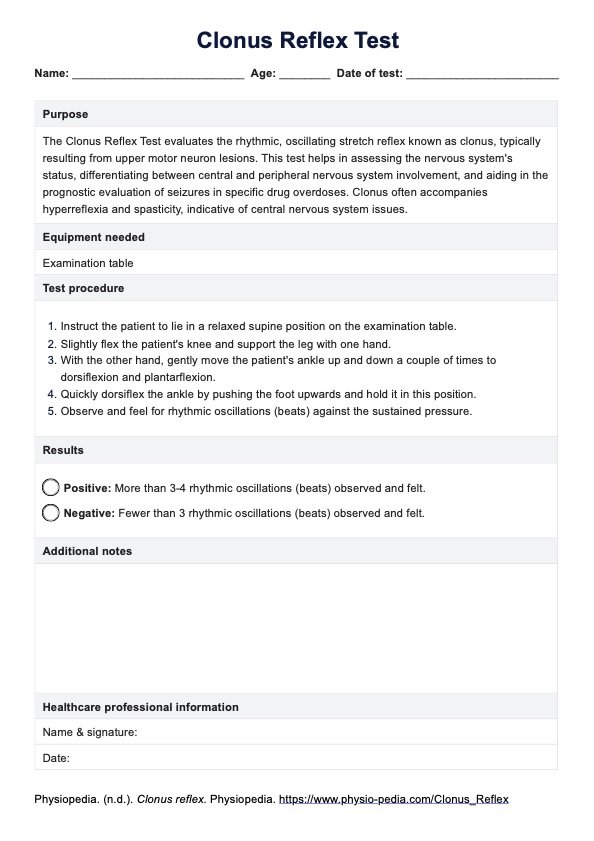




What is the clonus reflex?
The clonus reflex is a neurological condition characterized by involuntary muscle movements, specifically rhythmic muscle contractions and relaxations. It typically results from lesions affecting the upper motor neurons, which are part of the central nervous system, including the brain and spinal cord. Clonus commonly affects the ankles, knees, wrists, and jaw.
Causes
Clonus is usually associated with conditions that involve damage or disease to the central nervous system. These include multiple sclerosis, spinal cord injury, stroke, cerebral palsy, and traumatic brain injury. It can also be seen in certain metabolic disorders and as a response to drug overdoses that impact nerve cells in the nervous system.
Symptoms
The primary clonus symptoms are repetitive, rhythmic muscle contractions, often observed when a muscle is suddenly stretched. This can lead to significant muscle stiffness, pain, muscle weakness, and spasticity, impacting the individual’s ability to perform everyday tasks. The frequency of the oscillations can vary, typically ranging from 5 to 8 Hz.









