
Boredom can negatively affect mental health by increasing feelings of frustration, restlessness, and dissatisfaction. When prolonged, it may contribute to the development or worsening of conditions such as anxiety, depression, and substance abuse.
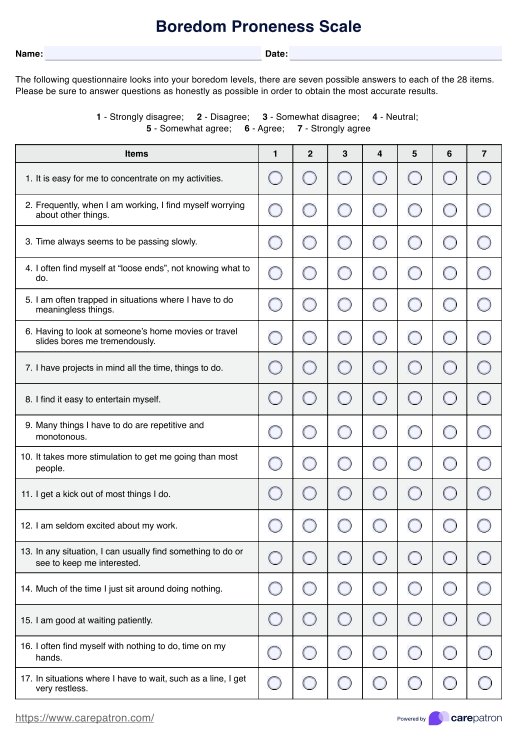



Boredom Proneness Scale
Assess and understand boredom tendencies with the Boredom Proneness Scale, a valuable tool for mental health professionals to evaluate emotional and cognitive states.
Use Template
Boredom Proneness Scale Template
Commonly asked questions
Yes. People experiencing boredom may engage in unhealthy behaviors to fill the void or escape discomfort. Common coping mechanisms include overeating, excessive screen time, substance use, and impulsive spending, all of which can further harm mental well-being.
Yes, persistent boredom can be a symptom of underlying mental health conditions such as depression, attention deficit hyperactivity disorder (ADHD), or dysthymia (chronic low-grade depression). It could indicate a deeper issue if you often feel "half dead" or dull. It's important to seek medical attention if these feelings persist, as they may be linked to an underlying condition.










EHR and practice management software
Get started for free
*No credit card required
Free
$0/usd
Unlimited clients
Telehealth
1GB of storage
Client portal text
Automated billing and online payments