









What is postural stability?
Postural stability, also known as balance, refers to maintaining the body’s center of mass over its support base. This ability is crucial for performing everyday activities, such as walking, standing, and sitting, without falling. Postural stability is a complex process involving sensory information from the visual, vestibular, and proprioceptive systems to produce appropriate motor responses.
Several factors can affect postural stability, including age, injury, and neurological conditions. For example, older adults often experience a decline in balance due to age-related changes in the sensory systems and muscle strength. Injuries, such as sprained ankles or concussions, can also disrupt postural stability by causing balance deficits and affecting the proprioceptive feedback from the injured area. Additionally, neurological conditions like Parkinson’s disease or multiple sclerosis can impair the neural pathways involved in balance control.
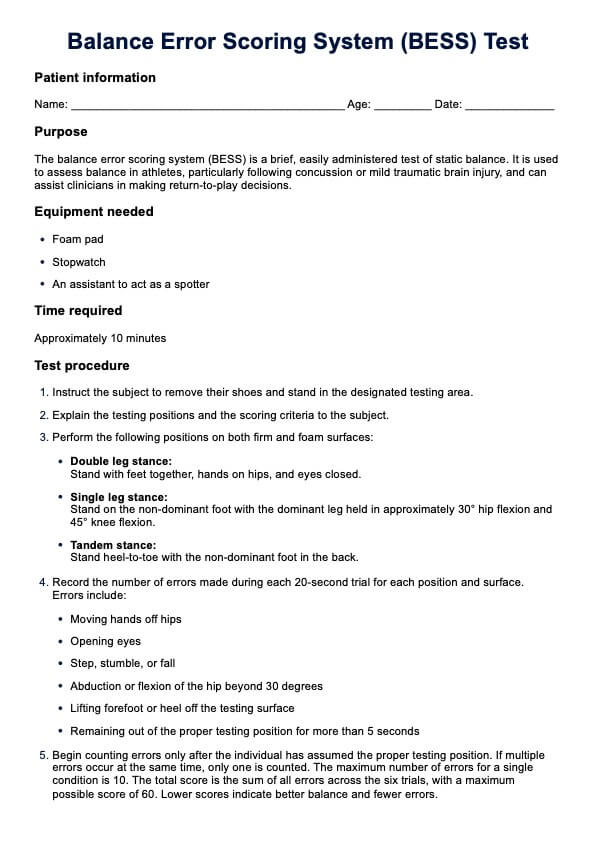
To check for postural stability, healthcare professionals use various assessments and tools. One commonly used tool is measured by the Balance and Error Scoring System (BESS), which evaluates static balance through different stances and surfaces. The total BESS score is instrumental in assessing athletes following concussions or a mild head injury to determine their readiness to return to play.









