






What is alcohol use disorder (AUD)?
Alcohol use disorder (AUD) is one of the substance use disorders characterized by a harmful drinking pattern that leads to clinically significant impairment (American Psychiatric Association, 2013). This is associated with lifelong adverse physical and mental health outcomes, such as illicit drug use, mental health disorders, cognitive impairments and early onset cancers, liver disease, and cardiovascular disease (Slade et al., 2024).
AUD is commonly confused with alcoholism, alcohol abuse, alcohol dependence, and alcohol addiction (National Institute on Alcohol Abuse and Alcoholism, 2024); in recent years, there has been increased support to classify it as AUD, as it is a less stigmatizing term that captures it as being a disease rather than a personal choice.
Three stages can be used as a model for translating brain changes associated with AUD to the clinical domain (Kwako et al., 2016; Koob et al., 2020).:
- Binge drinking/intoxication: Involves the development of incentive salience neurocircuits that are linked with the rewarding and pleasurable experience of drinking. These cues develop and strengthen habitual drinking.
- Withdrawal/negative affect: This is associated with states such as dysphoria, irritability, and anxiety. The person feels that alcohol is needed for relief from emotional pain and discomfort.
- Preoccupation/anticipation: This is associated with executive function deficits in the individual.
Alcohol use disorder symptoms
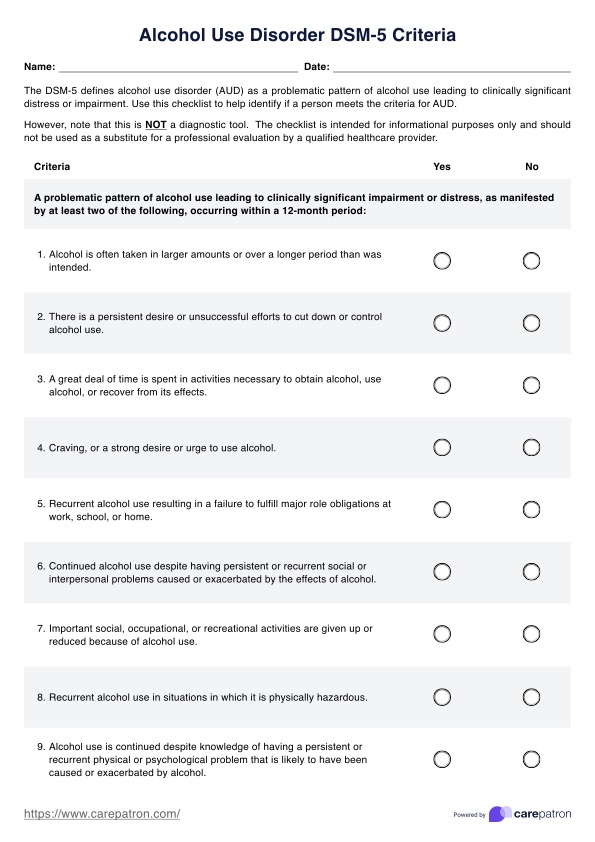
There are a number of symptoms that are associated with AUD. These include but are not limited to (American Psychiatric Association, n.d.):
- Increased alcohol consumption or consuming alcohol over a longer period of time than originally intended.
- Recurrent alcohol use, despite trying to cut down or control alcohol use.
- Craving, or a strong desire or urge to obtain alcohol.
- Drinking that interferes with responsibilities at home, work, or school.
It is important to note that just because the patient has some of these symptoms does not necessarily mean that they have AUD. If patients present two or more of these symptoms within the last year, it is important to clinically diagnose them using the DSM-5 criteria to reach an accurate diagnosis. This is to prevent further harm and determine the necessary treatment methods to support the patient with recovery.









