
A complete shoulder examination should include a review of the patient's medical history, observation of the affected shoulder's appearance and movement, palpation to identify any areas of tenderness or swelling, and specific tests to assess range of motion, strength, stability, and potential joint pathology. It is essential also to consider any associated factors such as neck pain or previous shoulder surgeries.
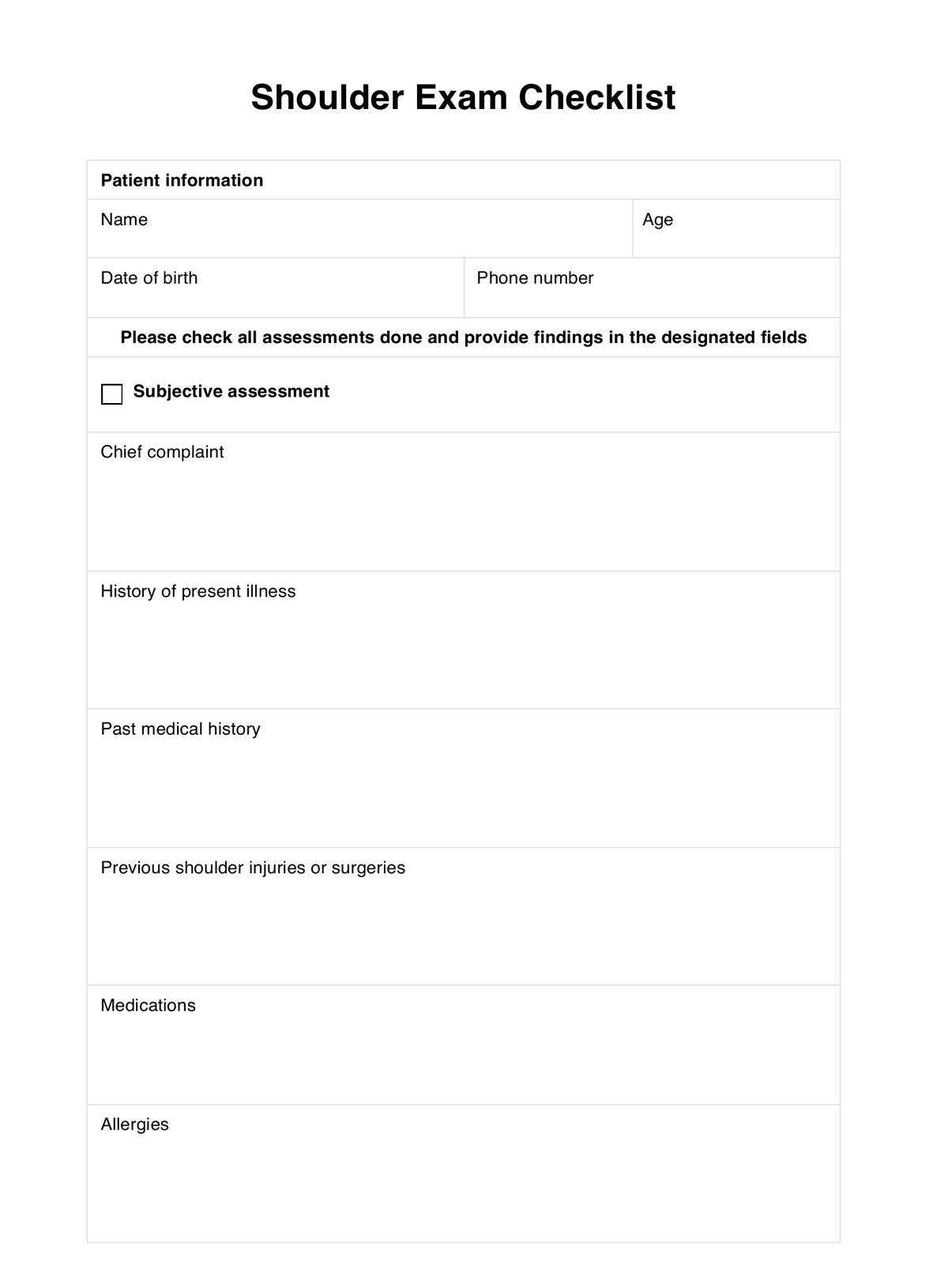



Shoulder Exam Checklist
Learn about the shoulder and its functions in this guide. Download a free Shoulder Exam Checklist for your practice.

Use Template
Shoulder Exam Checklist Template
Commonly asked questions
To perform a shoulder assessment, ask the patient about their medical history and any current or previous complaints related to the affected shoulder. Observe the appearance and movement of the shoulder, looking for any deformities, asymmetry, or restricted motion. Palpate the shoulder to identify any areas of tenderness or swelling.
You can use a Shoulder Exam Checklist when performing a shoulder examination to ensure you cover all aspects of the assessment and don't miss any important information. It can also be useful for documenting and tracking changes in patient conditions.










EHR and practice management software
Get started for free
*No credit card required
Free
$0/usd
Unlimited clients
Telehealth
1GB of storage
Client portal text
Automated billing and online payments