
Radial tunnel syndrome is a compression neuropathy of the radial nerve as it passes through the radial tunnel in the proximal radial forearm. It is caused by radial nerve irritation, often due to anatomic structures compressing the nerve. Symptoms include dorsal forearm pain and weakness of the extensor muscles.
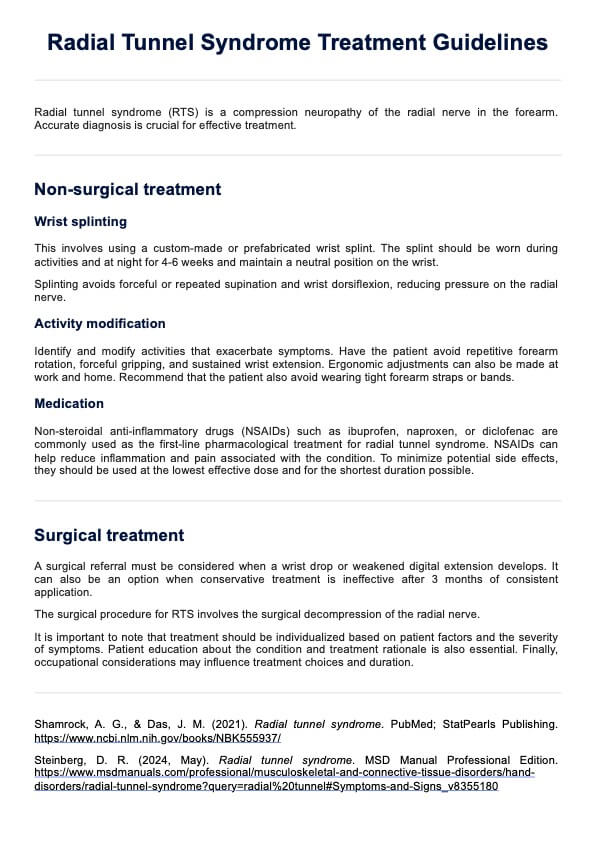



Radial Tunnel Syndrome Treatment Guidelines
Access a free Radial Tunnel Syndrom Treatment Guidelines handout that can serve as an educational resource or clinical reference.

Use Template
Radial Tunnel Syndrome Treatment Guidelines Template
Commonly asked questions
Diagnosis of radial tunnel syndrome involves a physical exam, nerve conduction velocity testing, and magnetic resonance imaging (MRI) to evaluate the radial nerve and surrounding structures. The anatomic radial tunnel extends from the lateral epicondyle to the distal edge of the supinator muscle. Obvious extensor muscle weakness may not be present.
Risk factors for developing radial tunnel syndrome include anatomic variations in the radial tunnel, repetitive activities that irritate the radial nerve, and proximal nerve pathology in the brachial plexus. Individuals with occupations or hobbies that involve repetitive forearm and wrist movements may be at higher risk.










EHR and practice management software
Get started for free
*No credit card required
Free
$0/usd
Unlimited clients
Telehealth
1GB of storage
Client portal text
Automated billing and online payments