
Recovery from post-concussion syndrome (PCS) can vary widely depending on the individual and the severity of their symptoms. While many patients experience improvement within a few weeks, others may take several months or longer to fully recover. During this time, it’s essential to engage in appropriate treatments like cognitive and physical therapy to alleviate symptoms and improve overall function. However, recovery timelines are not the same for everyone, and some patients may continue to experience persistent symptoms despite treatment.
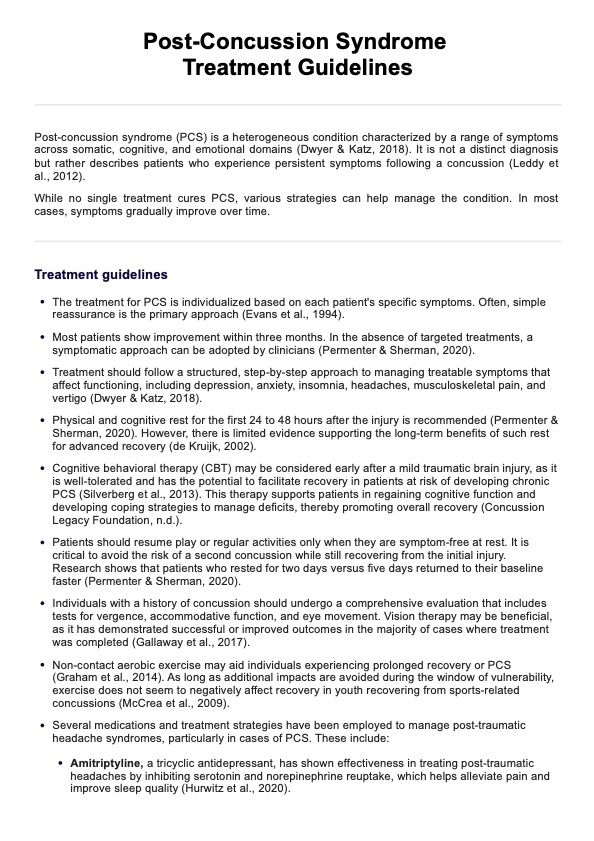



Post-Concussion Syndrome Treatment Guidelines
Learn more about post-concussion syndrome. Access a free Post-Concussion Syndrome Treatment Guidelines PDF to help educate your patients.

Use Template
Post-Concussion Syndrome Treatment Guidelines Template
Commonly asked questions
Managing post-concussion syndrome (PCS) typically involves a combination of therapies tailored to address both cognitive and physical symptoms. Cognitive therapy helps improve focus and memory, while physical therapy can alleviate symptoms related to headaches, dizziness, and fatigue. Non-contact aerobic exercises, vision therapy, and carefully monitored pharmacological interventions also play crucial roles.
When dealing with post-concussion syndrome (PCS), it’s important to avoid activities that can make symptoms worse, such as high-intensity exercise or anything that risks further head injury. Overexertion—both physically and mentally—can prolong recovery or even exacerbate symptoms. Instead, patients should follow their healthcare provider’s recommendations, including participating in safe, monitored physical therapy to alleviate symptoms without overloading the brain or body.










EHR and practice management software
Get started for free
*No credit card required
Free
$0/usd
Unlimited clients
Telehealth
1GB of storage
Client portal text
Automated billing and online payments