
A child diagnosed with oppositional defiant disorder (ODD) is most likely to exhibit a pattern of angry or irritable mood, argumentative or defiant behavior, and vindictiveness towards authority figures. This may include frequent temper tantrums, refusal to comply with rules, blaming others for their mistakes, and deliberately annoying others.
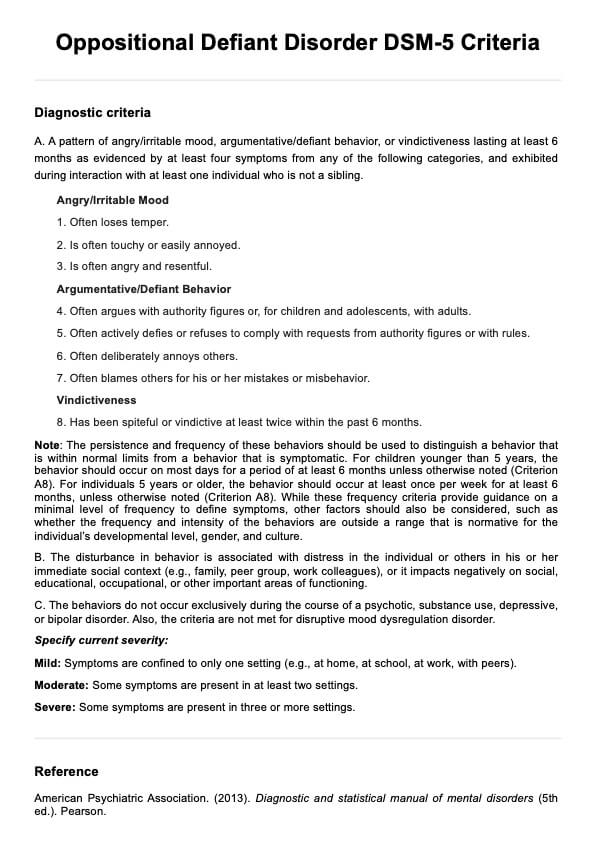



Oppositional Defiant Disorder DSM-5 Criteria
Access an Oppositional Defiant Disorder DSM-5 Criteria PDF as a reference tool in the clinical process.

Use Template
Oppositional Defiant Disorder DSM-5 Criteria Template
Commonly asked questions
To diagnose oppositional defiant disorder (ODD), a mental health professional typically conducts a comprehensive assessment that includes a clinical interview, behavioral observations, and standardized rating scales cross-referenced with diagnostic criteria in the DSM-5.
Oppositional defiant disorder (ODD) and attention-deficit/hyperactivity disorder (ADHD) are distinct but often co-occurring conditions. ODD is characterized by a pattern of defiant and oppositional behaviors, such as arguing with authority figures and being easily annoyed, while ADHD primarily involves symptoms of inattention, hyperactivity, and impulsivity.










EHR and practice management software
Get started for free
*No credit card required
Free
$0/usd
Unlimited clients
Telehealth
1GB of storage
Client portal text
Automated billing and online payments