
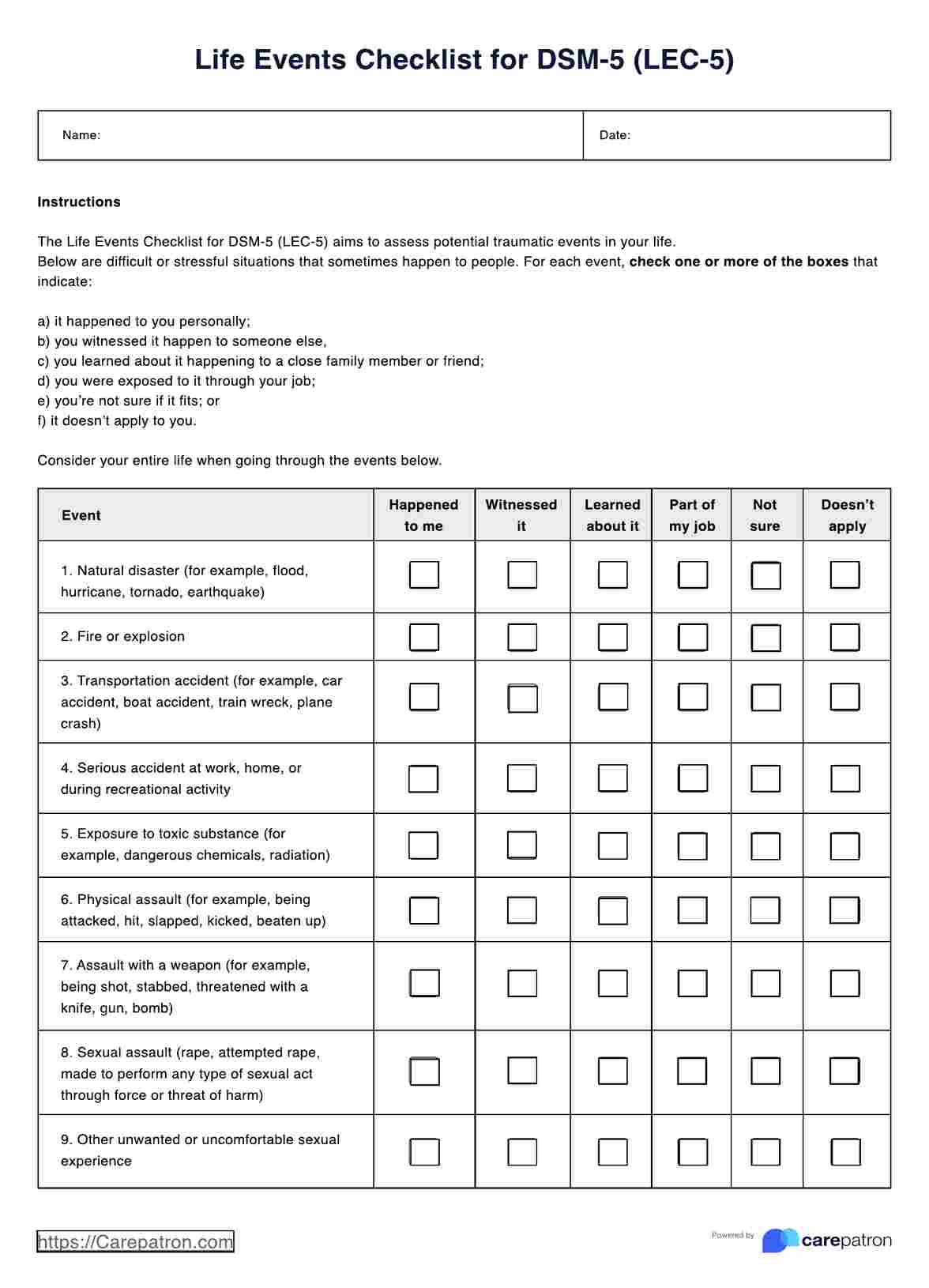




Interpreting the results of the Life Events Checklist can be tricky, as it's not necessarily a diagnostic tool but instead is used to gather data on potential triggers and stressors in a patient’s life.
Once you have the results, speaking with the patient is crucial to better understanding the events and their impact on their lives. As a mental health professional, it is up to you to assess the patient's mental health status and take appropriate action.









