
The Kim Test detects a posteroinferior labral lesion in the shoulder by applying specific forces to the arm and observing for posterior shoulder pain, a positive indicator.
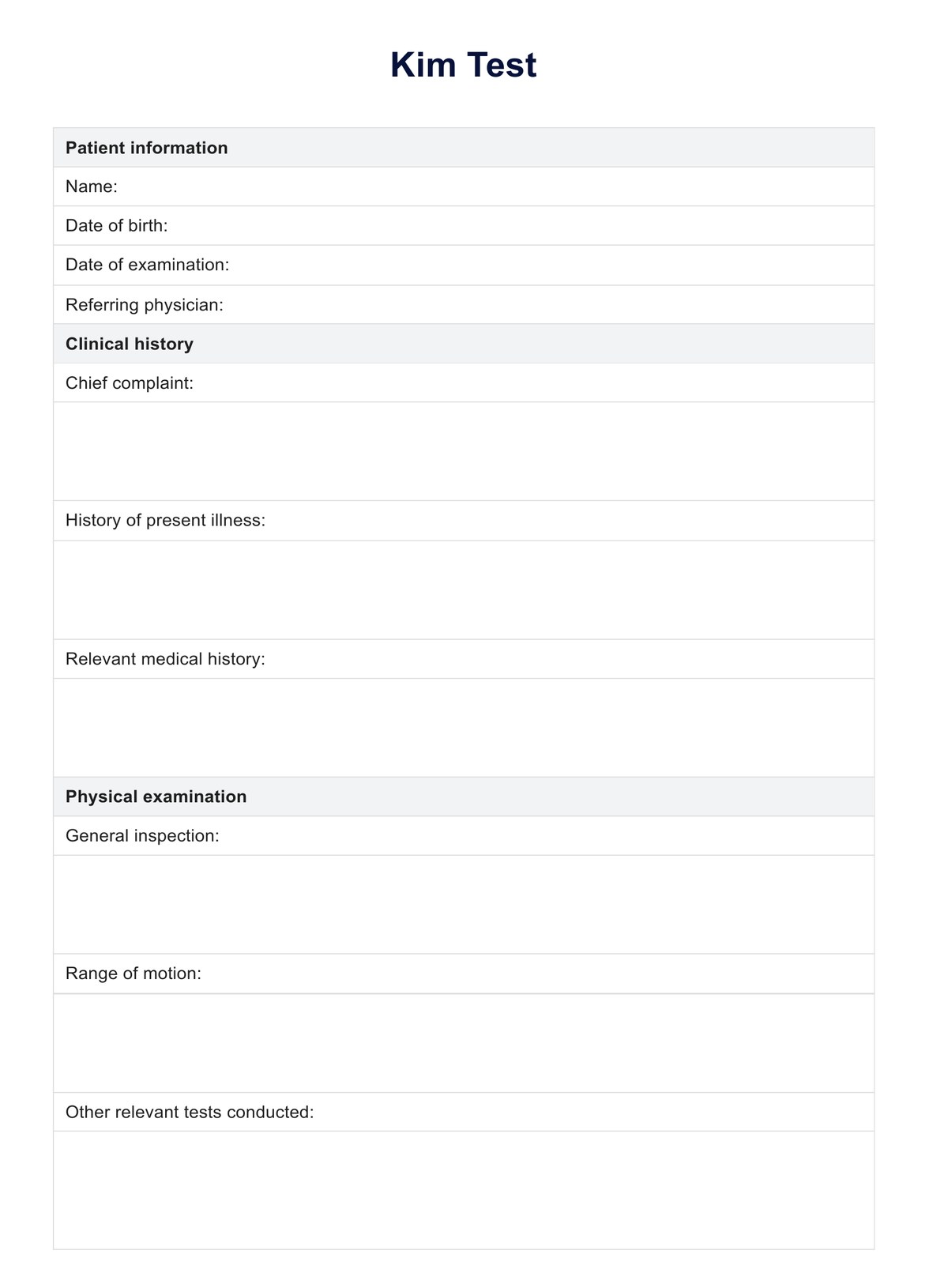



Kim Test
Explore the clinical insights and expertise on the Kim Test, an essential reading for medical practitioners seeking to enhance patient care.

Use Template
Kim Test Template
Commonly asked questions
During the Kim Test, the patient is seated with the arm at 90 degrees of abduction. The examiner applies axial loading force to the arm and then applies a downward and backward force while the arm is elevated diagonally. A sudden onset of posterior shoulder and elbow pain indicates physical examination and a positive test result.
The Kim Test is more sensitive in detecting predominantly posterior inferior labral lesions, while the jerk test detects predominantly inferior and posterior ones. Combining both tests enhances the sensitivity of this novel test for detecting posteroinferior labral lesions.










EHR and practice management software
Get started for free
*No credit card required
Free
$0/usd
Unlimited clients
Telehealth
1GB of storage
Client portal text
Automated billing and online payments