
To recognize your emotions, follow these three steps: first, identify what you are feeling by taking a moment to pause and reflect on your emotions without judgment, using a feelings list if necessary; next, locate where you feel it in your body, as physical sensations can provide clues about your emotional state; and finally, explore the reasons behind these feelings, which helps in understanding their origins and significance.
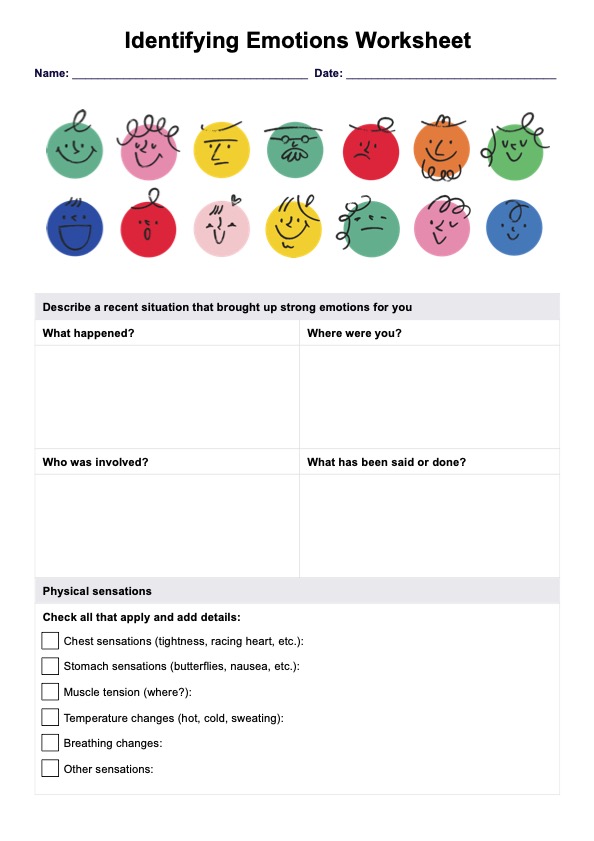



Identifying Emotions Worksheet
Help clients recognize and understand their emotions with our Identifying Emotions Worksheet, empowering them to manage their emotions effectively.

Use Template
Identifying Emotions Worksheet Template
Commonly asked questions
Teaching emotion recognition can be approached through various methods, such as modeling emotional expressions, using visuals like emotion wheels, and engaging children in discussions about feelings portrayed in stories or media. Activities like role-playing and games can also enhance their ability to identify and label emotions effectively.
To teach a child emotional regulation, start by discussing emotions during calm moments, helping them recognize and name their feelings. Use techniques such as deep breathing or counting to ten when they experience strong emotions. Encourage play-based exploration of feelings through storytelling or puppet play, and model appropriate responses to emotions yourself.










EHR and practice management software
Get started for free
*No credit card required
Free
$0/usd
Unlimited clients
Telehealth
1GB of storage
Client portal text
Automated billing and online payments