



HemoglobinAI Template IconToolbar IconShare Icon

Hemoglobin

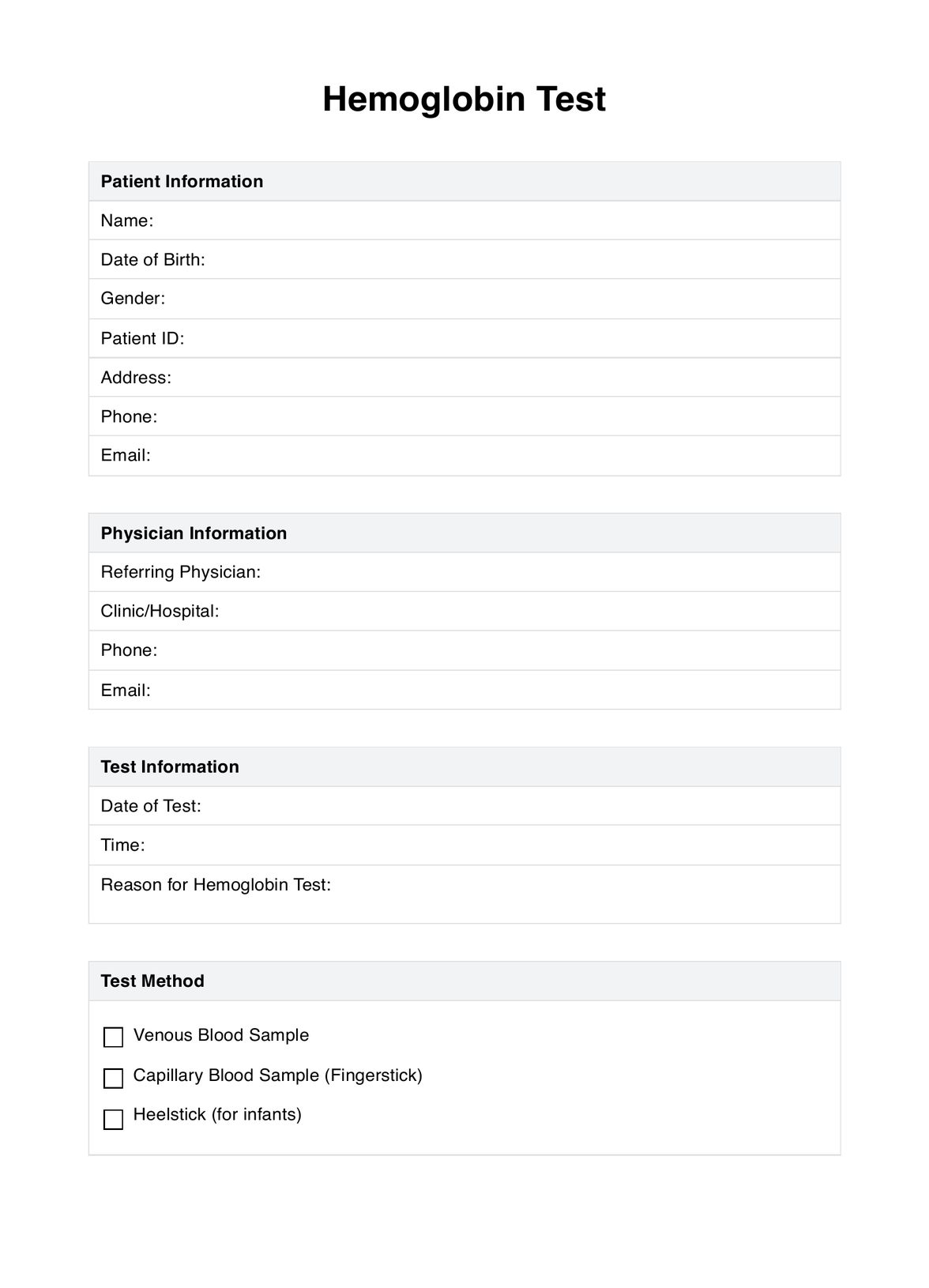
Dive deep into the Hemoglobin Test, its significance, methodologies, and clinical relevance. Get a comprehensive overview and access a free PDF download on the Hemoglobin Test.

Audrey Liz Perez avatar

By Audrey Liz Perez on Aug 2, 2025.

Fact Checked by Ericka Pingol.

Use Template

Commonly asked questions

Hemoglobin Tests are commonly requested by primary care physicians, internists, and hematologists. They might also be ordered by obstetricians for pregnant women, pediatricians for children exhibiting specific symptoms, or specialists managing chronic conditions that can impact red blood cell counts.

Occasionally, surgeons may request a hemoglobin test for pre-operative assessment.

Hemoglobin Tests are used in various scenarios, including:

  • Routine health check-ups to assess overall health.
  • When patients exhibit symptoms of anemia, such as fatigue, weakness, or pallor.
  • To monitor chronic conditions like kidney disease or rheumatoid arthritis that can affect hemoglobin levels.
  • During pregnancy, ensure both the mother and fetus receive adequate oxygen.
  • Before major surgical procedures as part of a pre-surgical assessment.
  • Evaluate the effectiveness of treatments or medications that may impact red blood cell production.

Hemoglobin Tests are conducted by drawing a blood sample, typically from a vein in the arm. This sample is then sent to a laboratory where it's analyzed to determine the concentration of hemoglobin. The results are compared to established reference ranges to ascertain their normal limits. Deviations from the normal range can indicate various health conditions, and the test results help healthcare professionals diagnose, monitor, and formulate treatment plans for these conditions.

EHR and practice management software

Get started for free

*No credit card required

Free

$0/usd

Unlimited clients

Telehealth

1GB of storage

Client portal text

Automated billing and online payments







