Healthcare providers, including primary care physicians, specialists (rheumatologists, oncologists, gastroenterologists), and emergency physicians, typically request a Globulin Test to assess a patient's health.

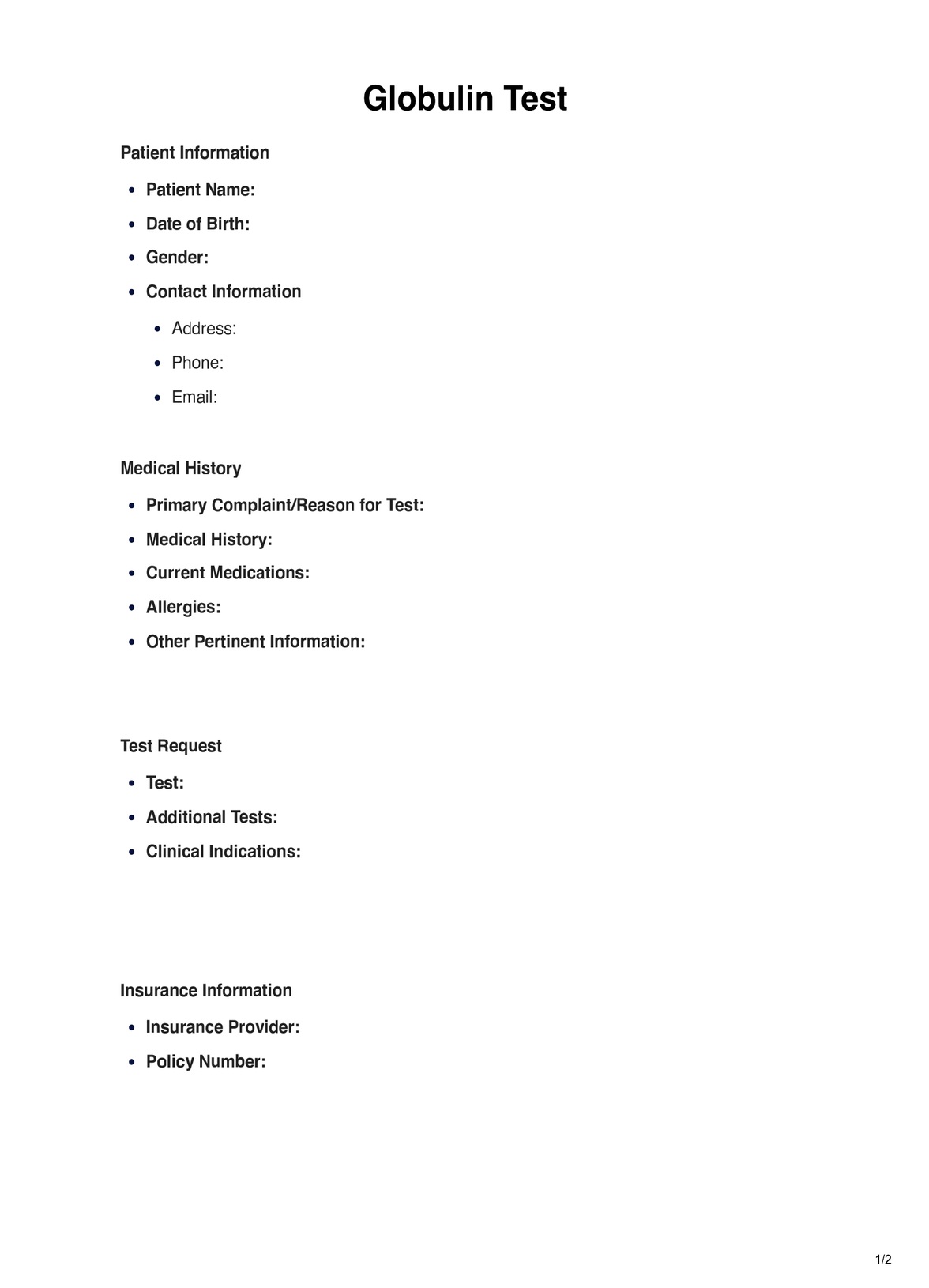



Discover the importance of the Globulin Test, its uses, and what results mean—your essential resource for understanding this medical examination.

Healthcare providers, including primary care physicians, specialists (rheumatologists, oncologists, gastroenterologists), and emergency physicians, typically request a Globulin Test to assess a patient's health.
Globulin Tests are used for various purposes, including routine check-ups, disease diagnosis (e.g., autoimmune diseases, multiple myeloma), monitoring disease progression, assessing liver and kidney function, evaluating immune system status, and nutritional assessments.
A blood sample is collected through venipuncture, mixed with an anticoagulant, and centrifuged to separate the serum. The serum is then tested using methods like spectrophotometry or electrophoresis to measure protein levels, with results interpreted in the context of the patient's medical history and symptoms.
EHR and practice management software
*No credit card required
Free
$0/usd
Unlimited clients
Telehealth
1GB of storage
Client portal text
Automated billing and online payments









