
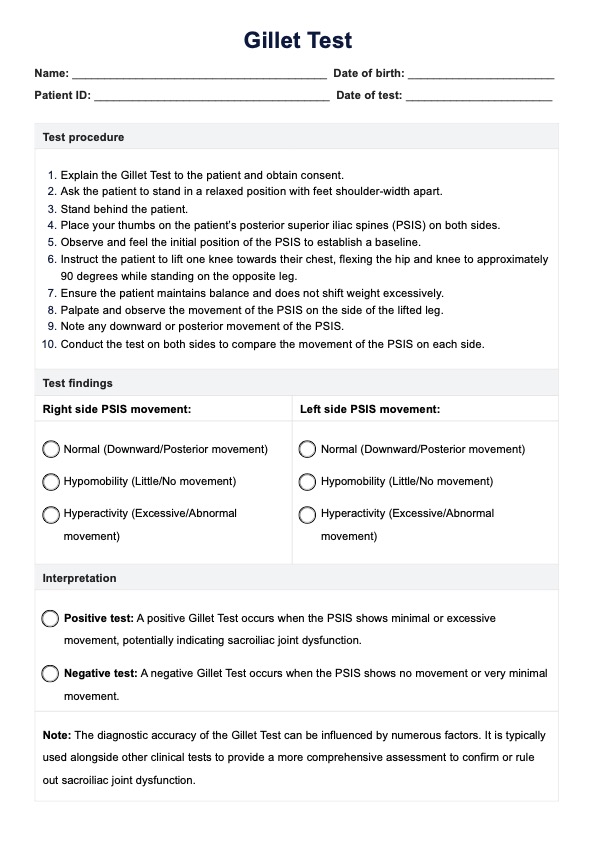
The Gillet Test, also known as the Stork Test, is used to assess the mobility and function of the sacroiliac (SI) joint. It helps identify potential dysfunctions by observing the movement of the posterior superior iliac spines (PSIS) during specific leg movements.



Gillet Test
Learn about the Gillet Test for assessing sacroiliac joint dysfunction, including step-by-step procedures, interpretation, and more. Free PDF download.

Use Template
Gillet Test Template
Commonly asked questions
The Gillet Test involves the patient standing while the examiner palpates the PSIS. The patient lifts one knee towards the chest, and the examiner observes the movement of the PSIS on the tested side. Normal movement indicates a functioning SI joint, while abnormal movement suggests dysfunction.
If the PSIS on the tested side moves downward or posteriorly, it indicates normal SI joint function. Little to no movement or excessive motion suggests sacroiliac joint dysfunction, which can contribute to lower back and buttock pain. The test results should be considered alongside other clinical assessments for an accurate diagnosis.










EHR and practice management software
Get started for free
*No credit card required
Free
$0/usd
Unlimited clients
Telehealth
1GB of storage
Client portal text
Automated billing and online payments