
Identifying feelings starts with noticing physical sensations, thoughts, and behavioral cues that signal an emotional response. Encourage clients to pause, name what they’re experiencing, and describe it using specific language rather than general terms like “good” or “bad.” Over time, practicing emotional labeling through tools like a Feelings Worksheet can strengthen awareness and emotional insight.
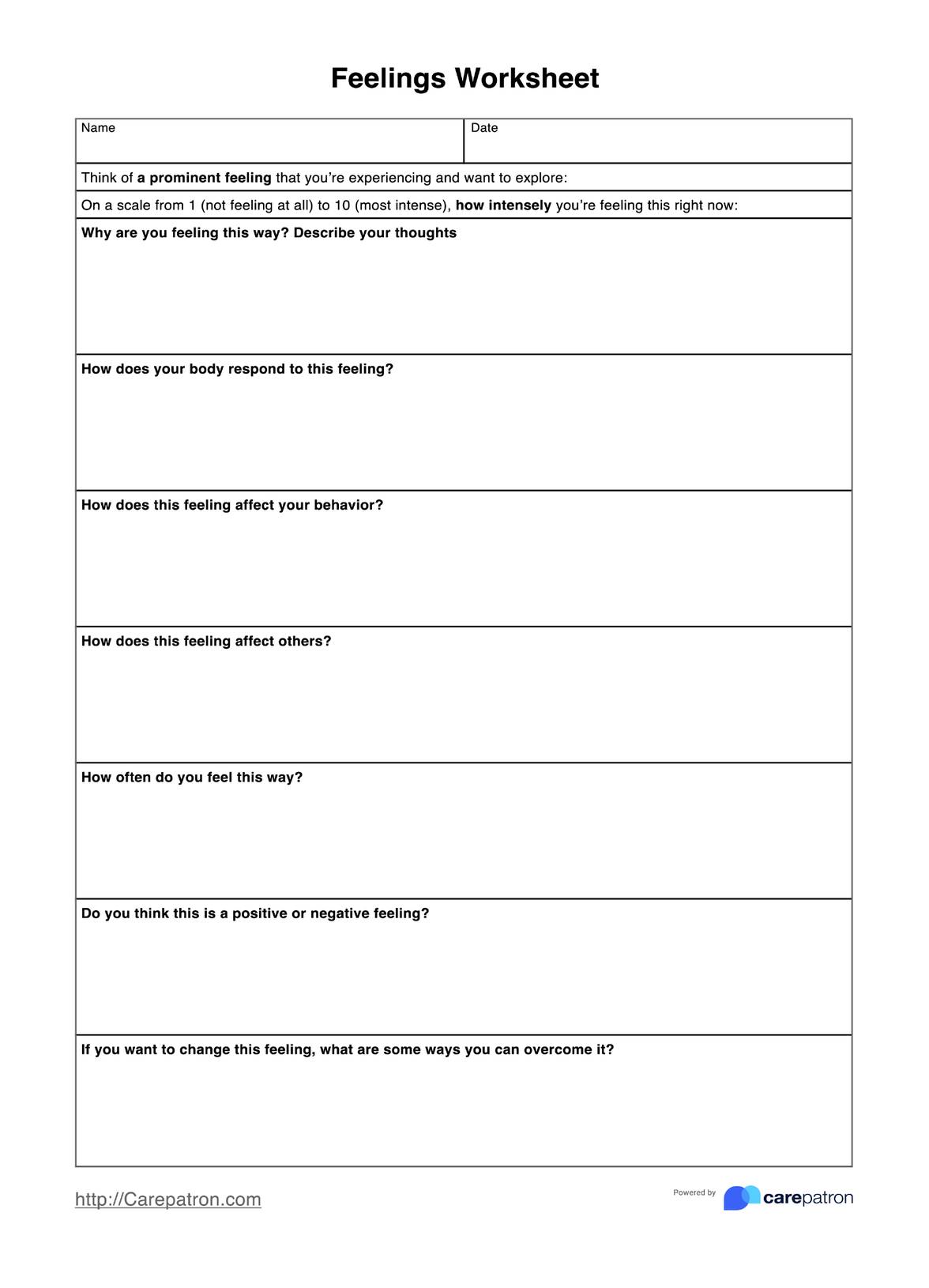



Feelings Worksheets
Support emotional awareness in clients with our Feelings Worksheet guide—learn how to use it effectively in and outside therapy sessions.

Use Template
Feelings Worksheets Template
Commonly asked questions
While emotions are complex and varied, psychologists often group them into six basic categories: happiness, sadness, fear, anger, surprise, and disgust. These core feelings form the foundation for more nuanced emotional states, such as contentment, frustration, or anxiety. Recognizing these categories helps clients build a clearer emotional vocabulary and understand how different feelings influence their behavior.
The 4 R’s of emotional regulation are Recognize, Reflect, Reframe, and Respond. Clients first recognize what they’re feeling, reflect on its source, reframe unhelpful thoughts, and respond with adaptive coping strategies. Using this framework helps individuals manage emotions intentionally rather than reactively, fostering emotional balance and resilience.










EHR and practice management software
Get started for free
*No credit card required
Free
$0/usd
Unlimited clients
Telehealth
1GB of storage
Client portal text
Automated billing and online payments