
Fear-avoidance beliefs are prevalent among individuals with chronic pain, but the extent varies depending on factors such as pain severity, previous experiences, and psychological factors.
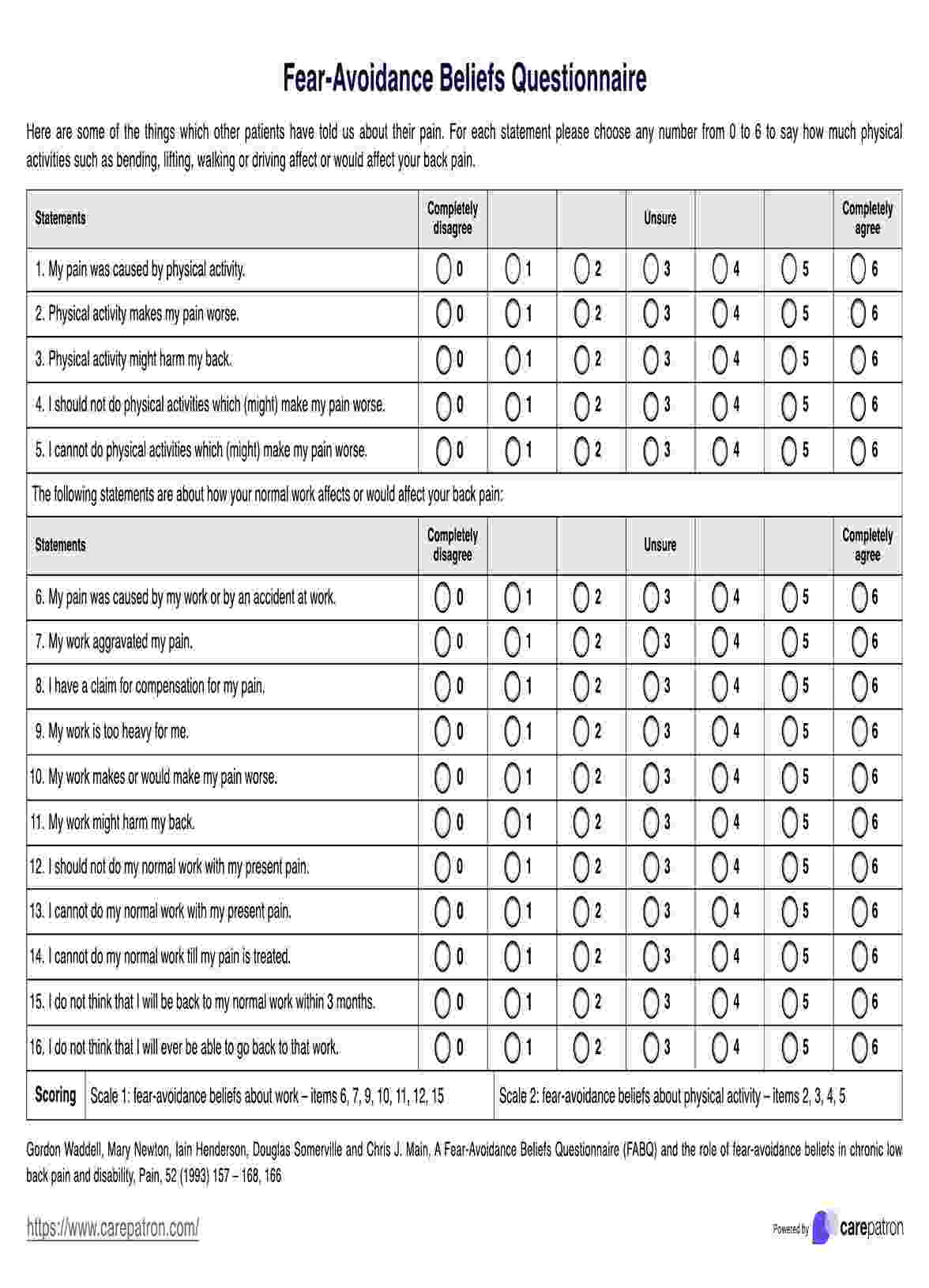



Fear-Avoidance Beliefs Questionnaire
Our free Fear-Avoidance Beliefs Questionnaire (FABQ) example unlocks insights into fear-avoidance beliefs. Download the PDF now for reference!

Use Template
Fear-Avoidance Beliefs Questionnaire Template
Commonly asked questions
Yes, elevated fear-avoidance beliefs are associated with poorer treatment outcomes, including increased disability and reduced effectiveness of pain management interventions.
Patients can cope with fear-avoidance beliefs by seeking support from healthcare professionals, engaging in physical activity gradually and safely, practicing relaxation techniques, and challenging negative thoughts about pain and activity.










EHR and practice management software
Get started for free
*No credit card required
Free
$0/usd
Unlimited clients
Telehealth
1GB of storage
Client portal text
Automated billing and online payments