
Persistent depressive disorder (PDD), also known as dysthymia, is characterized by a depressed mood that lasts for at least 2 years, with the presence of at least two additional symptoms such as poor appetite, insomnia, low energy, low self-esteem, poor concentration, or feelings of hopelessness. In contrast, cyclothymia is a milder form of bipolar disorder, involving mood swings between hypomania and mild depression that last for at least 2 years in adults or 1 year in children and adolescents.
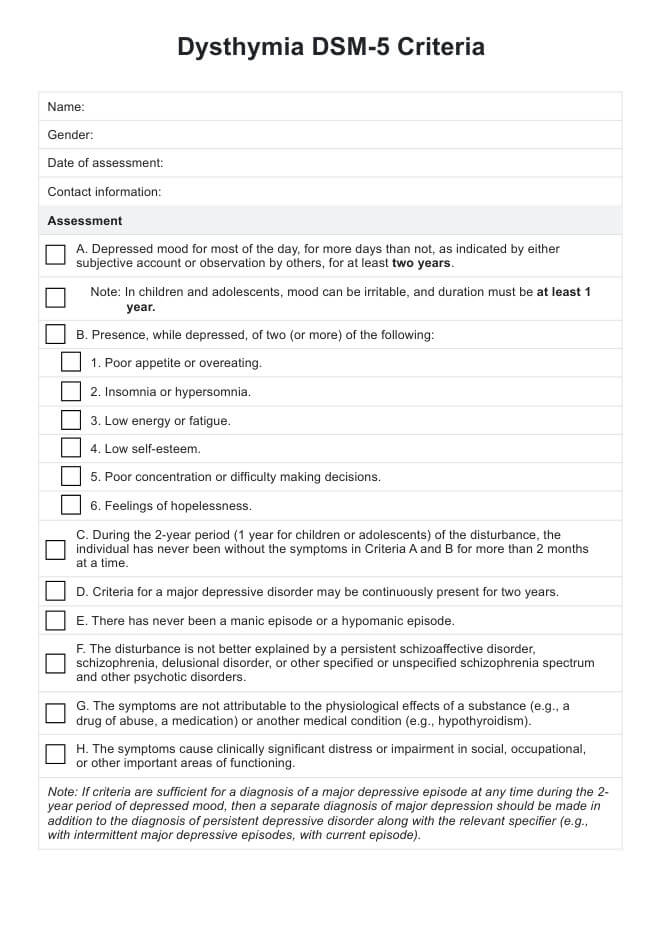



Dysthymia DSM-5 Criteria
Access a helpful reference tool with our Dysthymia DSM-5 Criteria when assessing persistent depressive symptoms in patients.

Use Template
Dysthymia DSM-5 Criteria Template
Commonly asked questions
If left untreated, persistent depressive disorder (dysthymia) can lead to significant impairment in daily functioning, social relationships, and overall quality of life. It may also increase the risk of developing a major depressive episode or other mental health conditions.
The DSM-5 code for persistent depressive disorder (PDD) is F34.1.










EHR and practice management software
Get started for free
*No credit card required
Free
$0/usd
Unlimited clients
Telehealth
1GB of storage
Client portal text
Automated billing and online payments