
A mental health professional diagnoses this dissociative disorder through a detailed assessment, which may include clinical interviews, patient history, and standardized diagnostic criteria such as those found in the Diagnostic and Statistical Manual of Mental Disorders, 5th Edition (DSM-5). The assessment evaluates the extent of memory loss and rules out other potential causes, such as neurological conditions or substance abuse.
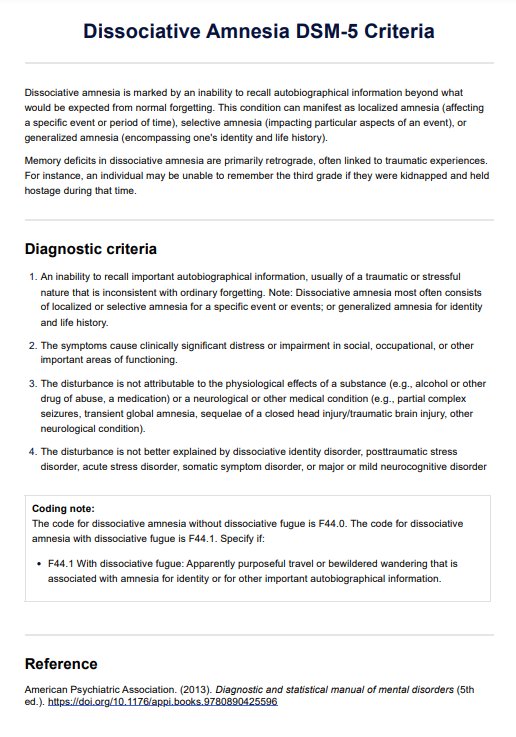



Dissociative Amnesia DSM-5 Criteria
Learn about dissociative amnesia and how it's diagnosed using the DSM-5. Download a free PDF handout for your practice here.

Use Template
Dissociative Amnesia DSM-5 Criteria Template
Commonly asked questions
Dissociative amnesia is often triggered by a traumatic event such as sexual abuse, natural disasters, combat, or otherwise highly distressing incidents. Memory loss is typically linked to these overwhelming events, which the mind attempts to block out as a way to cope.
There is no guaranteed way to prevent dissociative amnesia, but seeking therapy after experiencing traumatic events may help reduce the risk of developing the disorder.










EHR and practice management software
Get started for free
*No credit card required
Free
$0/usd
Unlimited clients
Telehealth
1GB of storage
Client portal text
Automated billing and online payments