
Delayed gratification activities include tasks that require individuals to postpone immediate rewards in favor of larger, long-term benefits. Examples of ways to practice delayed gratification through activities include saving money for a significant purchase instead of spending it impulsively, studying for an exam rather than engaging in leisure activities, and practicing a skill consistently over time to achieve mastery.
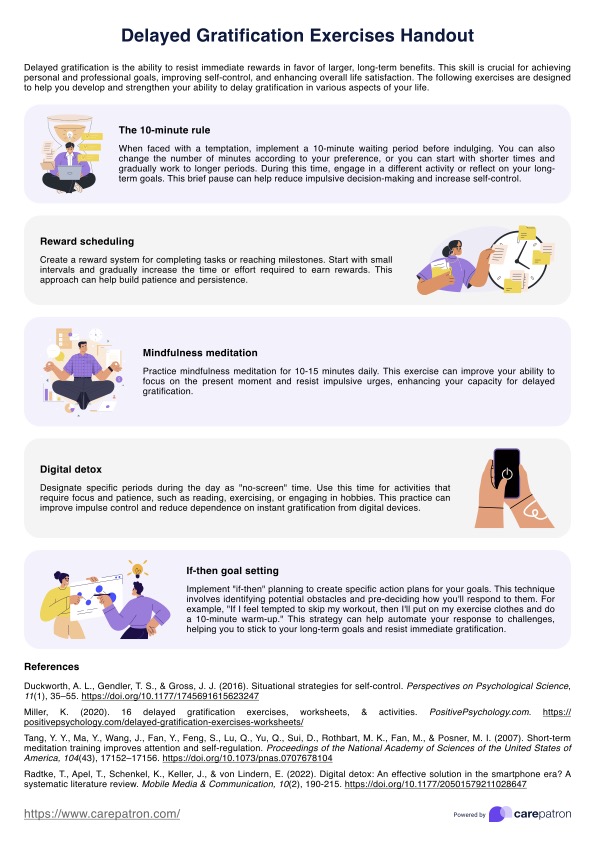



Delayed Gratification Exercises Handout
Help clients build self-control and emotion regulation skills with our Delayed Gratification Exercises Handout.

Use Template
Delayed Gratification Exercises Handout Template
Commonly asked questions
Teaching delayed gratification involves modeling self-control strategies and providing opportunities for practice. Parents and educators can help individuals practice self-control, more specifically, encourage children to wait for rewards by introducing games that require patience, such as waiting for a treat after completing a chore or task. Additionally, discussing the benefits of delayed gratification and helping individuals set long-term goals can reinforce the importance of patience.
Exercising delayed gratification can lead to numerous benefits, including improved self-control, better decision-making skills, and enhanced emotional regulation. Developing the ability to delay gratification helps individuals cultivate patience and persistence in various aspects of life.










EHR and practice management software
Get started for free
*No credit card required
Free
$0/usd
Unlimited clients
Telehealth
1GB of storage
Client portal text
Automated billing and online payments