
Close-ended questions don't allow clients to explain their situation or point of view entirely. These questions often elicit a "yes" or "no" answer. Open-ended questions will enable the individual to explain further and allow for reflection.
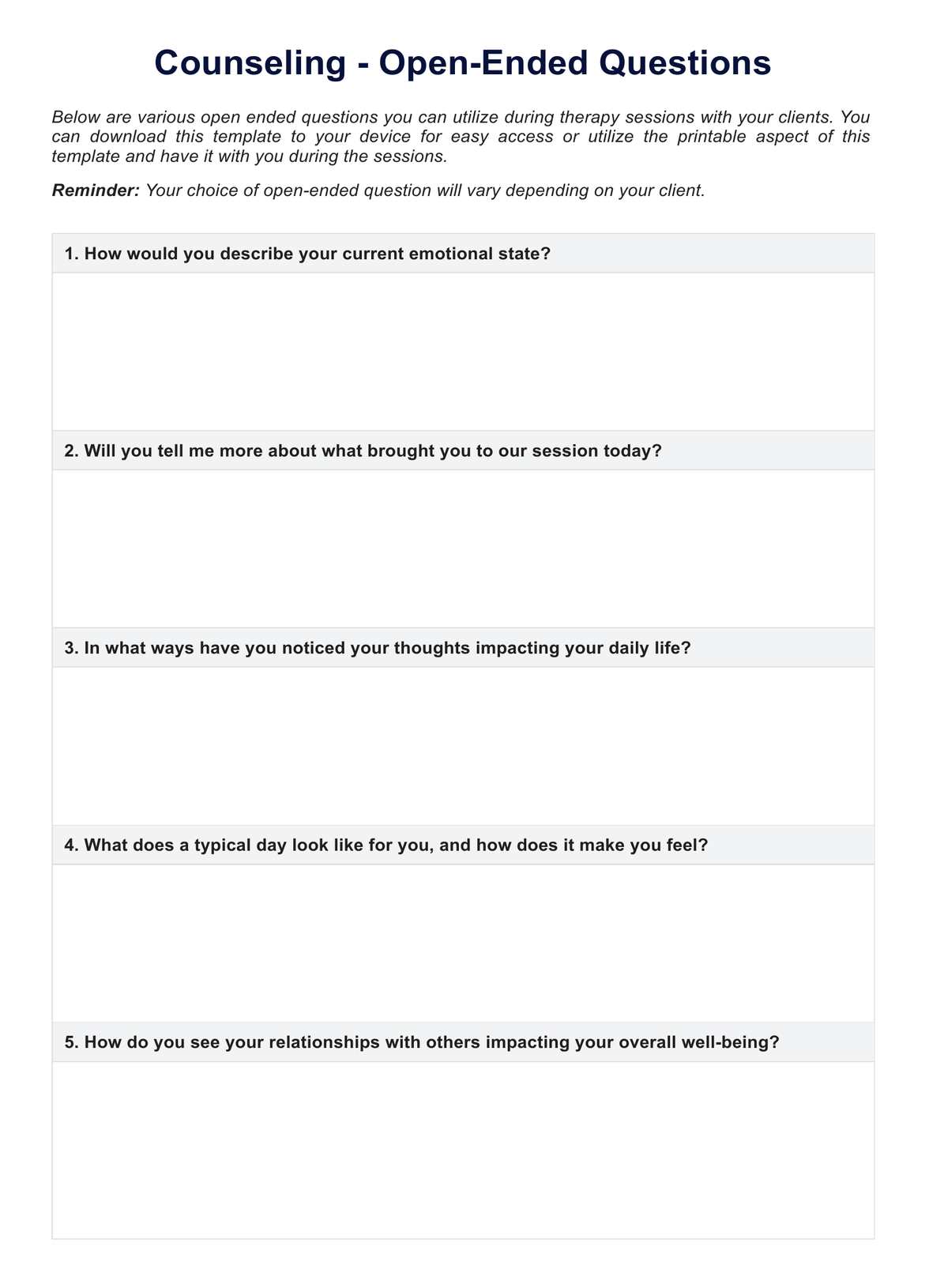



Counseling Open-Ended Questions PDF
Click here to learn more about Counseling Open-ended Questions and how to utilize them during client sessions.

Use Template
Counseling Open-Ended Questions PDF Template
Commonly asked questions
When you want to elicit more information from a client, they are valuable in interviews, counseling sessions, and any situation where you'd like to gather more information about a person and their feelings. Open-ended questions help uncover perspectives, emotions, and details that closed-ended questions can't capture.
Crafting practical open-ended questions involves choosing the right words. Start questions with words such as "how," "why," or "what," and avoid leading language. Allow space for the respondent to share their perspective. Open-ended questions are powerful for promoting communication and gaining insights into complex issues.










EHR and practice management software
Get started for free
*No credit card required
Free
$0/usd
Unlimited clients
Telehealth
1GB of storage
Client portal text
Automated billing and online payments