
Mental health professionals, such as therapists, counselors, and psychologists, use the Cognitive Distortion List. However, it's also a valuable tool for individuals undergoing therapy. The list can help them monitor their thoughts, identify distortions, and work on replacing them with healthier thinking patterns.
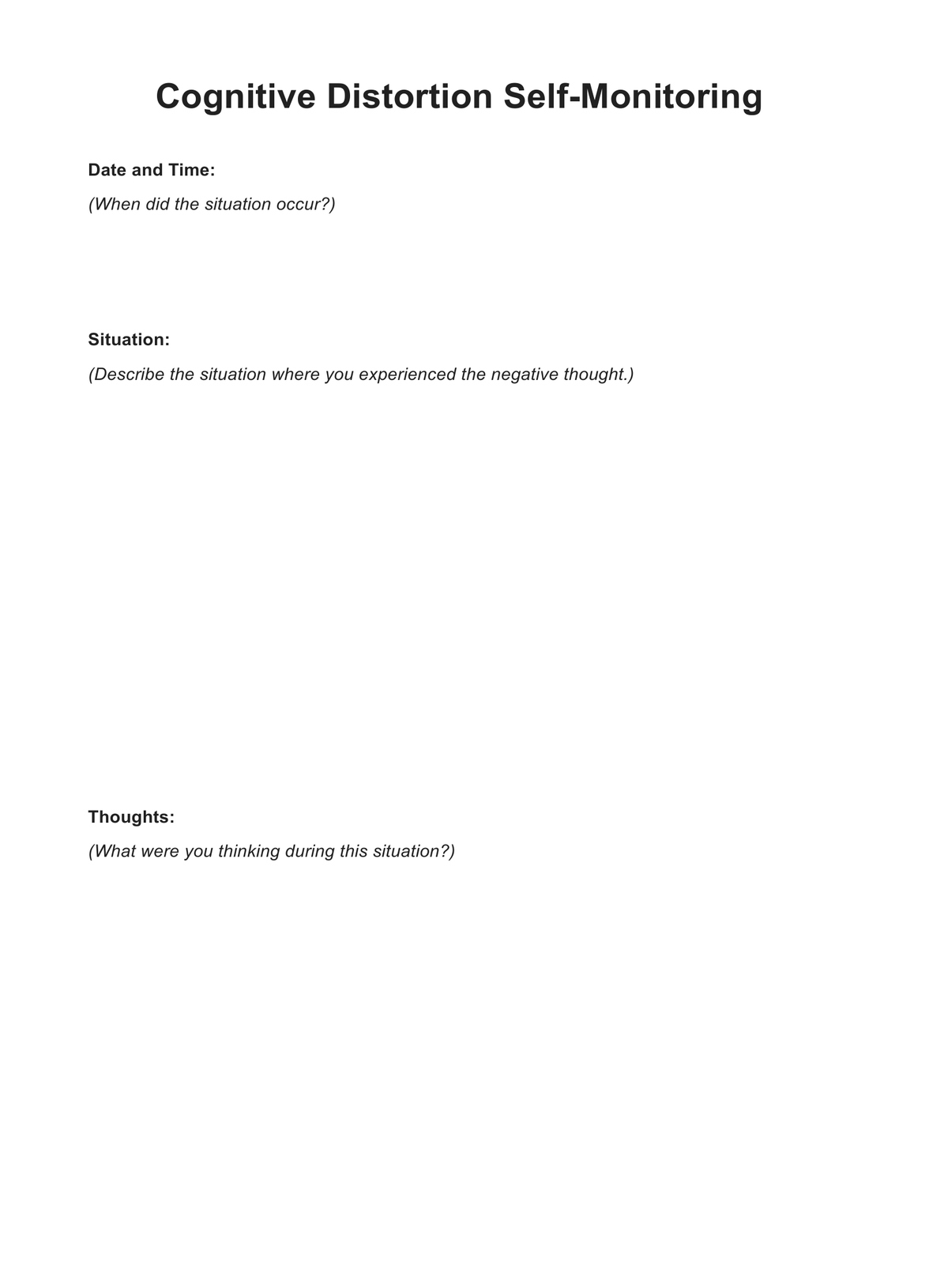



Cognitive Distortion Lists
Explore Cognitive Distortion List, a tool to identify, and challenge distorted thoughts, enhancing mental well-being in therapy sessions.

Use Template
Cognitive Distortion Lists Template
Commonly asked questions
The Cognitive Distortion List is typically used in cognitive-behavioral therapy (CBT) sessions but isn't restricted to the therapy room. It can be used anytime an individual notices recurring negative thoughts or feelings. The list helps identify if these thoughts result from cognitive distortions and provides a foundation to challenge and change these distortions.
The Cognitive Distortion List helps individuals identify and understand their distorted thinking patterns. It's used in therapy to aid cognitive restructuring, challenging and replacing these distortions with healthier thoughts. The list can also be used outside therapy for self-monitoring and practice.










EHR and practice management software
Get started for free
*No credit card required
Free
$0/usd
Unlimited clients
Telehealth
1GB of storage
Client portal text
Automated billing and online payments