
A cervical compression test is a diagnostic maneuver performed by healthcare professionals to assess the integrity and potential compression of cervical nerve roots in the spinal cord.It is conducted to identify symptoms indicative of nerve root compression, such as pain, tingling, or numbness, helping to localize and diagnose conditions like disc herniation or foraminal stenosis.



Cervical Compression Test
Discover the essentials of cervical compression tests – a comprehensive guide for understanding, performing, and interpreting results accurately.

Use Template
Cervical Compression Test Template
Commonly asked questions
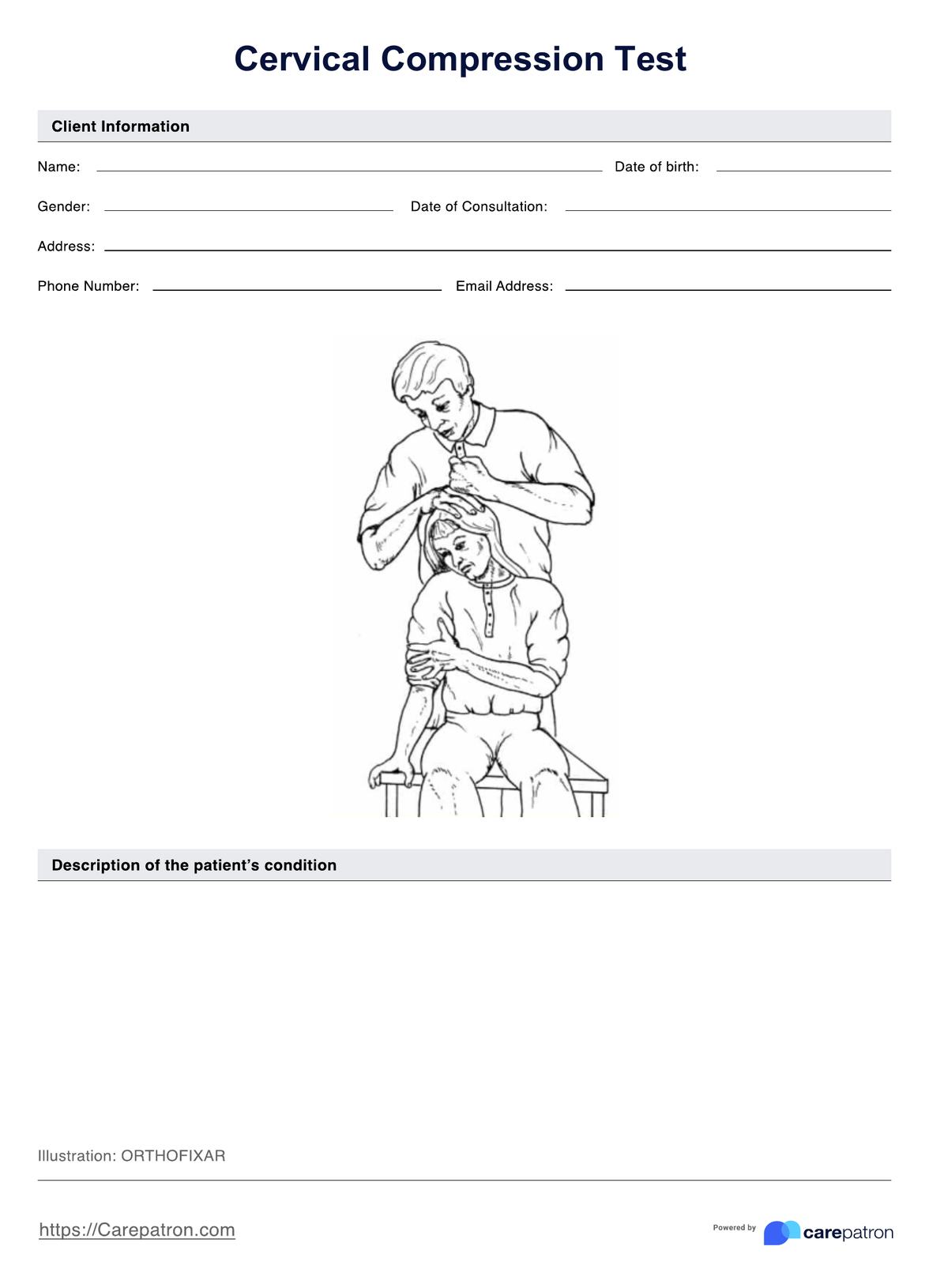
During the test, the patient typically sits or lies down, and the examiner applies gentle downward pressure on the patient's head, compressing the cervical spine. A positive test result is characterized by reproducing or exacerbating radicular symptoms, such as shooting pain or tingling down the arms. This suggests potential nerve root compression or irritation, guiding further diagnostic investigations and treatment planning.
Cervical compression tests are often conducted in patients presenting with symptoms suggestive of cervical spine pathology. These may include neck pain, radiating arm pain, weakness, or sensory changes in the upper extremities. The test is particularly relevant for assessing conditions like herniated discs, spinal stenosis, or nerve root impingement, aiding in the differential diagnosis of cervical spine disorders.










EHR and practice management software
Get started for free
*No credit card required
Free
$0/usd
Unlimited clients
Telehealth
1GB of storage
Client portal text
Automated billing and online payments