
Caffeine withdrawal headaches occur when a person who regularly consumes caffeine suddenly reduces their intake or quits altogether. These headaches are part of caffeine withdrawal symptoms, which may include fatigue, irritability, and difficulty concentrating. Withdrawal causes changes in blood flow, as caffeine narrows blood vessels, and its absence leads to dilation, resulting in headache pain. To prevent these withdrawal headaches, gradually reduce caffeine intake instead of quitting cold turkey.
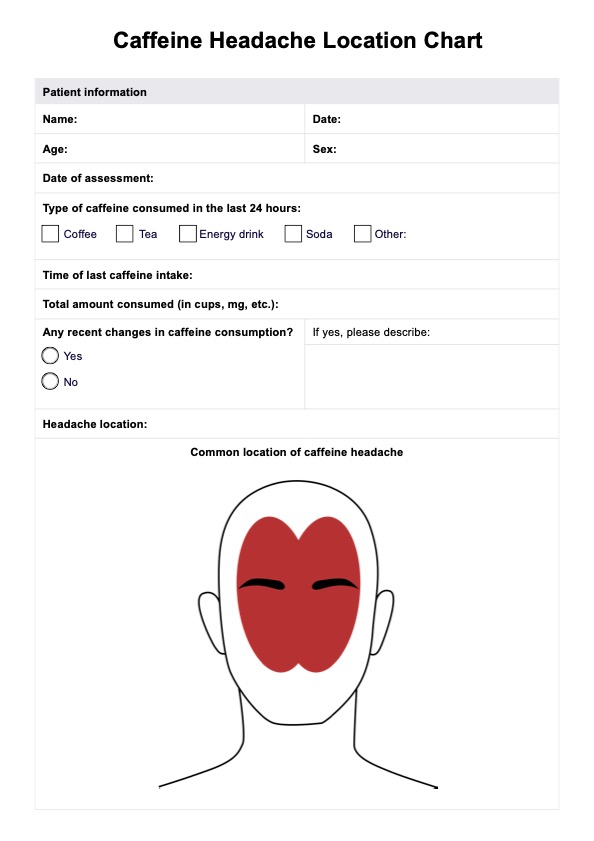



Caffeine Headache Location Chart
Track and understand headaches with our Caffeine Headache Location Chart. Identify triggers, record symptoms, and tailor relief strategies. Download now!

Use Template
Caffeine Headache Location Chart Template
Commonly asked questions
Caffeine can be used to treat headaches, particularly migraine headaches or tension headaches, by temporarily constricting blood vessels and alleviating migraine pain. Small doses of caffeine in caffeinated beverages or as part of migraine treatment can be effective. However, overuse of caffeine can lead to caffeine dependence or rebound headaches, where frequent use results in the opposite effect. Limiting daily caffeine intake and consuming it in moderate amounts can help avoid these issues.
For most individuals, 200–400 milligrams of caffeine per day (roughly 2–4 cups of coffee) is considered safe. Consuming excessive amounts or relying heavily on energy drinks and other caffeinated products can lead to chronic daily headaches or medication overuse headaches. For those prone to migraines, it’s crucial to maintain consistent daily caffeine habits, as fluctuations in caffeine consumed can act as a migraine trigger, increasing the risk of migraine attacks.










EHR and practice management software
Get started for free
*No credit card required
Free
$0/usd
Unlimited clients
Telehealth
1GB of storage
Client portal text
Automated billing and online payments