
The Bernese Ankle Rules test helps determine the necessity of radiographic imaging in patients with ankle trauma. It aims to reduce unnecessary X-rays while ensuring that significant fractures are not missed, improving diagnostic accuracy and patient care.
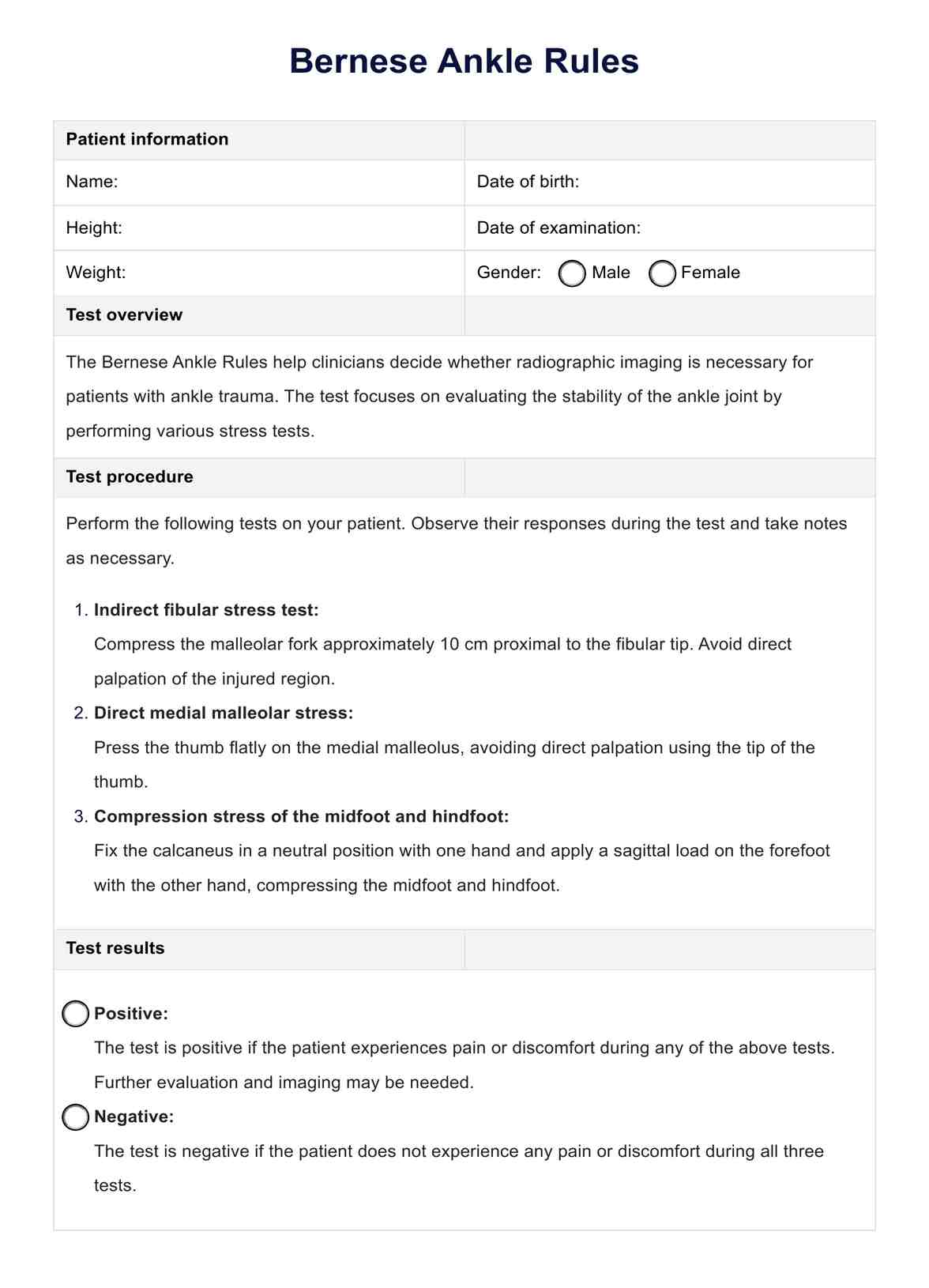



Bernese Ankle Rules
Discover how to use the Bernese Ankle Rules for effective ankle injury assessment. Learn the benefits, step-by-step procedures, and treatments for accurate diagnosis and care.

Use Template
Bernese Ankle Rules Template
Commonly asked questions
The Bernese Ankle Rules involve three stress tests to identify potential fractures in an injured ankle: the indirect fibular stress test, the direct medial malleolar stress test, and the compression stress of the midfoot and hindfoot. These tests help determine the need for further imaging or treatment.
The sensitivity of the Bernese Ankle Rules test is approximately 55.7%, and the specificity is around 79%. This means it is a moderately reliable test in detecting fractures and particularly effective in identifying patients who do not need radiographs, reducing unnecessary imaging.










EHR and practice management software
Get started for free
*No credit card required
Free
$0/usd
Unlimited clients
Telehealth
1GB of storage
Client portal text
Automated billing and online payments