
Anterior interosseous nerve syndrome is a condition characterized by paralysis of the anterior interosseous nerve, leading to weakness in the muscles it innervates, such as the pronator quadratus. This nerve runs alongside the anterior interosseous artery in the proximal forearm and is crucial for fine motor movements. When affected, patients may struggle with tasks that require precise finger and thumb movements.
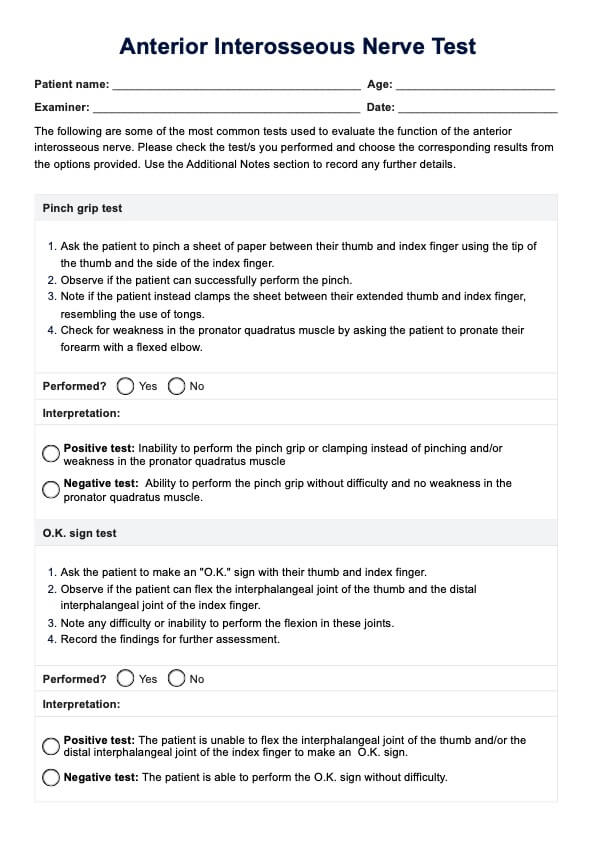



Anterior Interosseous Nerve Test
Efficiently diagnose anterior interosseous nerve syndrome with our comprehensive Anterior Interosseous Nerve Test template. Download for free.

Use Template
Anterior Interosseous Nerve Test Template
Commonly asked questions
The common symptoms of anterior interosseous nerve syndrome include weakness in the thumb, index, and middle fingers, difficulty performing fine motor tasks like pinching or gripping, and making an O.K. sign.
Conditions that can mimic the symptoms of anterior interosseous nerve syndrome (AINS) include carpal tunnel syndrome, flexor tendon injuries, brachial plexus injuries, and cervical radiculopathy. The pronator teres muscle can also cause entrapment of the anterior interosseous nerve, leading to similar symptoms. Accurate diagnosis often requires a combination of clinical examination and diagnostic tests like electromyography (EMG) and MRI.










EHR and practice management software
Get started for free
*No credit card required
Free
$0/usd
Unlimited clients
Telehealth
1GB of storage
Client portal text
Automated billing and online payments