Types of Scar Management
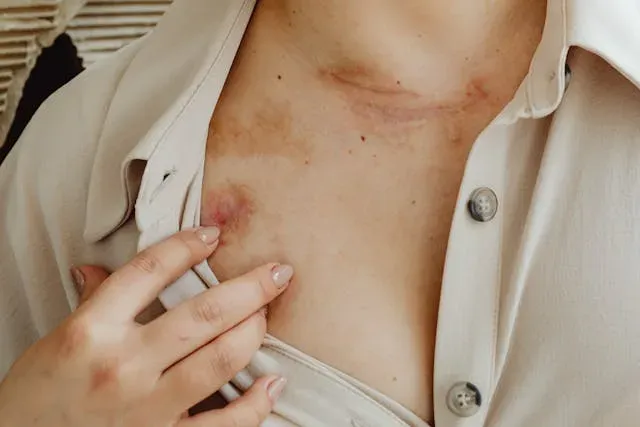
Scar Management encompasses a wide range of techniques, each with its own benefits and applications. Here's an overview of some common Scar Management approaches:
1. Silicone gel sheeting
These thin, transparent silicone sheets, are applied directly to the scar and worn for several hours daily. The silicone material helps hydrate the scar tissue, reduce redness, and flatten raised acne scars by promoting collagen production and reducing scar tissue formation.
2. Pressure therapy
Applying gentle, consistent pressure to the scar using garments or bandages can improve scar texture and flatten raised scars. This type of scar therapy is thought to work by reducing blood flow to reduce the appearance of scar tissue, minimizing scar tissue formation, and promoting scar alignment. Pressure therapy is often most effective in treating scars when initiated early in the healing process.
3. Scar massage
Gentle skin massage techniques can improve blood flow to the scar, soften scar tissue, and increase scar mobility. Therapists may recommend specific massage techniques tailored to the individual scar and instruct patients in self-massage techniques for ongoing care at home. Scar massage can also help reduce pain and itching associated with some scars.
4. Topical creams and ointments
Various creams and ointments containing ingredients like corticosteroids or silicone can be used over the counter to treat acne scars and target specific scar concerns. Corticosteroid creams can help reduce inflammation and itching associated with some scars, while silicone-based topical medications can offer similar benefits to silicone gel sheeting in a cream form.
5. Cryotherapy
Freezing the scar tissue with liquid nitrogen can effectively reduce the size and prominence of keloid scars and hypertrophic scars. This technique works by destroying some of the scar tissue cells, leading to a reduction in scar size. Cryotherapy is typically performed in a clinical setting by a healthcare professional.
6. Chemical peels
Chemical peels involve applying a chemical solution to the skin's surface to remove damaged outer layers. This technique can be helpful for improving the appearance of superficial acne scars by promoting new skin cell growth and a smoother texture. However, chemical peels are not suitable for all scar types and should be performed by a qualified healthcare professional.
7. Laser therapy
Laser therapy uses concentrated beams of light to target scar tissue. Depending on the type of laser used, it can improve the appearance of scars by stimulating collagen production, reducing scar redness, and promoting a smoother texture. Laser therapy is typically used in conjunction with other Scar Management techniques for optimal results.
These are just a few examples, and the choice of technique will depend on the specific type of scar and the severity of the scar. In some cases, a combination of these approaches might be used for optimal results.