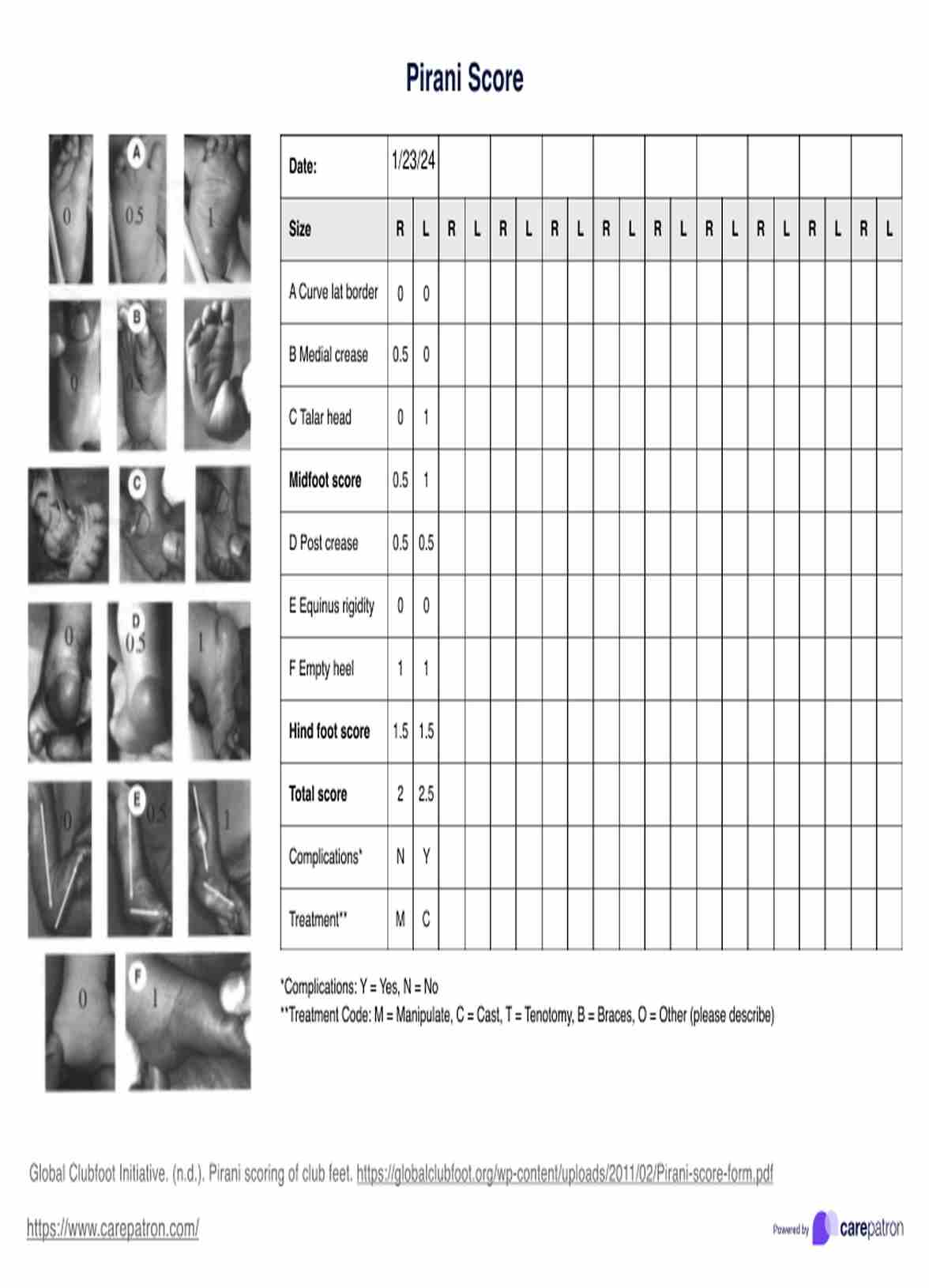
What is the Pirani Score?
The Pirani scoring system is a widely used tool for assessing the severity of clubfoot deformity in infants. It involves evaluating six clinical signs of contracture in the midfoot and hindfoot, with each sign scored as 0 (no deformity), 0.5 (moderate deformity), or 1 (severe deformity).The six signs assessed are:
- Medial crease
- Curved lateral border
- Lateral head of talus
- Posterior crease
- Empty heel
- Rigid equinus
The total Pirani score ranges from 0 to 6, with a higher score indicating a more severe deformity. A score of 0 would mean no deformity, while a score of 6 represents the most severe clubfoot (Khan et al., 2017).
It's important to note that a corrected clubfoot after Ponseti treatment may not always have a Pirani score of 0, as the score may not fully capture the degree of foot abduction and dorsiflexion in some patients.
The Pirani Score plays a crucial role in the assessment and treatment of clubfoot in pediatric orthopaedics. This clubfoot scoring system, which involves a detailed physical examination by an orthopedic surgeon, assesses various aspects of the individual foot to assign an initial score. The initial Pirani Score is essential for predicting treatment outcomes, as there is a significant positive correlation between the score and the required interventions.
Effective clubfoot treatment often relies on the accuracy of the Pirani Score, highlighting its significance in the management and correction of the condition. Consequently, understanding the significant correlation provided by the Pirani Score can greatly enhance the predictability and success of treatment protocols for clubfoot.