





Pelvic ExamAI Template IconToolbar IconShare Icon

Pelvic Exam

Discover Carepatron, the ultimate physician software with an advanced online patient portal and telehealth platform, streamlining healthcare management.

RJ Gumban avatar

By RJ Gumban on Aug 2, 2025.

Fact Checked by Nate Lacson.

Use Template

Introduction to pelvic function

The pelvis is a foundational structure within the human musculoskeletal system (Chaudhry et. al., 2023), serving as both a biomechanical anchor and a protective enclosure for vital visceral organs.

Far more than a static bony framework, the pelvis plays a central role in structural support, locomotion, and organ protection during physical examination.

Anatomically, the pelvis provides attachment points for multiple muscle groups involved in posture, gait, and core stabilization. It supports the weight of the upper body when sitting and standing and transfers that weight to the lower limbs during ambulation. This function is critical for maintaining balance and enabling efficient movement patterns involving the lower abdomen and female pelvis.

In terms of visceral support, the pelvic cavity houses and safeguards several essential organs. In individuals assigned female at birth, this includes the uterus, ovaries, fallopian tubes, and urinary bladder. In those assigned male at birth, the pelvis contains the prostate, seminal vesicles, and bladder. The bony and ligamentous structures of the pelvis provide a protective barrier for internal organs and reproductive organs while maintaining the necessary flexibility for functions such as childbirth and elimination.

Given its multifaceted role in both mechanical and physiological functions, the pelvis warrants routine clinical assessment. This includes pelvic examinations, which are essential for monitoring reproductive health, evaluating structural integrity, screening for sexually transmitted infections (STIs), and identifying early signs of pathology like pelvic pain or abnormal bleeding.

What is a Pelvic Exam?

A Pelvic Exam is like a routine checkup for the pelvic region (Bialy & Wray, 2024). It's a way for doctors to ensure everything in the pelvic station runs smoothly. It is an essential part of assessing sexual and reproductive health.

During a Pelvic Exam, a healthcare provider examines the pelvic area, including the vulva, vagina, cervix, uterus, ovaries, fallopian tubes, and bladder. The external exam focuses on external genitalia, while the internal assessment evaluates pelvic organs via techniques such as the bimanual exam and rectovaginal exam.

The exam typically involves a visual inspection, a manual palpation where the doctor feels for any abnormalities, and sometimes a Pap test or Pap smear, where cells from the cervix are collected to check for cervical cancer. If signs such as abnormal vaginal discharge or genital warts are present, additional testing for sexually transmitted infections (STIs) may be conducted.

For many women, a pelvic exam is a regular part of their health routine, usually starting in their late teens or early twenties. Monitoring reproductive health, identifying potential issues like cervical motion tenderness, and ensuring overall pelvic health are crucial.

How does this Pelvic Exam work?

A pelvic examination is a routine procedure performed by healthcare professionals to assess the health of the female reproductive organs. Here's a step-by-step guide on how the Pelvic Exam procedure typically works:

Step 1: Get the template

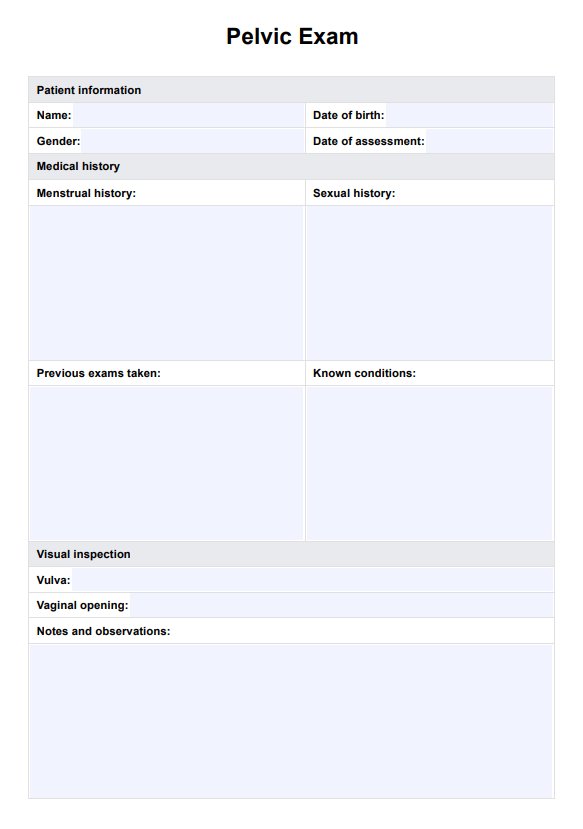
Open the Pelvic Exam documentation via the Carepatron app by clicking the "Use template" button. This lets you customize the form based on your clinic's specifications. You can also download a PDF version by choosing "Download."

The exam begins with a medical assistant who ensures the patient's comfort and privacy. The patient is taken to a private examination room or exam room and given instructions on preparing, usually involving undressing from the waist down and using a gown for modesty before lying on the exam table. A drape is provided to cover the patient’s buttock for additional comfort.

Step 2: Discuss during consultation

Before the physical exam, discuss the patient's medical history, menstrual cycle, sexual activity, and any symptoms or health concerns, such as pelvic pain or abnormal discharge. This conversation helps tailor the examination to the patient's specific needs.

Step 3: Perform visual inspection

The external genital area is visually inspected for abnormalities, signs of infection, vaginal discharge, or other issues. This includes checking the external genitalia such as the vulva and the opening of the vaginal canal.

Step 4: Proceed with manual examination

Conducts a manual examination to assess the internal reproductive organs. This involves palpating the abdomen and an internal examination of the cervix, uterus, and ovaries through the vaginal walls. A bimanual exam may also be conducted using the index finger to feel for masses or tenderness.

Step 5: Conduct a Pap test

If necessary, a Pap test is performed. A speculum is used to widen the vaginal opening, and a small sample of cells is collected from the cervix for laboratory analysis. This speculum examination allows for a clearer view of the cervix and the collection of accurate samples for detecting cervical cancer and sexually transmitted infections.

After the exam, discuss the findings with the patient, provide recommendations, and schedule follow-up appointments or additional tests if abnormal findings are present.

Next steps for improving pelvic health

Following a Pelvic Exam, several steps can be taken to improve pelvic pain or maintain pelvic health:

  • Follow-up care: If any abnormalities are found, appropriate follow-up care, which may include additional tests or specialist referrals, is crucial.
  • Lifestyle modifications: Recommendations may be made to improve pelvic health, such as dietary adjustments, regular exercise, or pelvic floor exercises.
  • Regular screenings: Regular pelvic exams and Pap tests are essential for early detection of potential health issues, especially for women at risk of certain conditions like cervical cancer.
  • Addressing symptoms: If the patient reports pain or irregular bleeding, specific treatments or interventions might be recommended to address these issues.
  • Educational resources: Providing patients with educational resources about pelvic health can empower them to make informed decisions about their care and lifestyle.

Benefits of using this exam template

Here are the advantages of having a Pelvic Exam documentation template:

Standardized documentation

The template ensures that all relevant aspects of the exam are systematically documented, promoting thoroughness and consistency in patient care.

Enhanced communication

Clear documentation aids in communication among healthcare providers, especially if the patient needs to be referred to a specialist.

Improved patient care

A detailed template helps capture a complete picture of the patient's pelvic health, leading to more accurate diagnoses and tailored treatment plans.

Educational tool

The template is an educational tool for new healthcare professionals, providing a clear structure for conducting and documenting pelvic exams.

Efficient record-keeping

The template simplifies record-keeping, making it easier to track patient health changes over time and during follow-up visits.

References

Bialy, A., & Wray, A. A. (2024, February 25). Gynecologic examination. StatPearls Publishing. https://www.ncbi.nlm.nih.gov/books/NBK534223/

Chaudhry, S. R., Hulaibi, F. A., Nahian, A., & Chaudhry, K. (2023, July 25). Anatomy, abdomen and pelvis, pelvis. StatPearls Publishing. https://www.ncbi.nlm.nih.gov/books/NBK482258/

Commonly asked questions

Carepatron is designed to integrate seamlessly with existing electronic health record systems, enhancing data accessibility and workflow efficiency.

Absolutely, Carepatron provides customizable features that can be tailored to meet the specific needs of various medical specialties, ensuring a personalized user experience.

Carepatron prioritizes the privacy and security of patient data by adhering to healthcare regulations and employing advanced security measures to protect sensitive information.

EHR and practice management software

Get started for free

*No credit card required

Free

$0/usd

Unlimited clients

Telehealth

1GB of storage

Client portal text

Automated billing and online payments







