





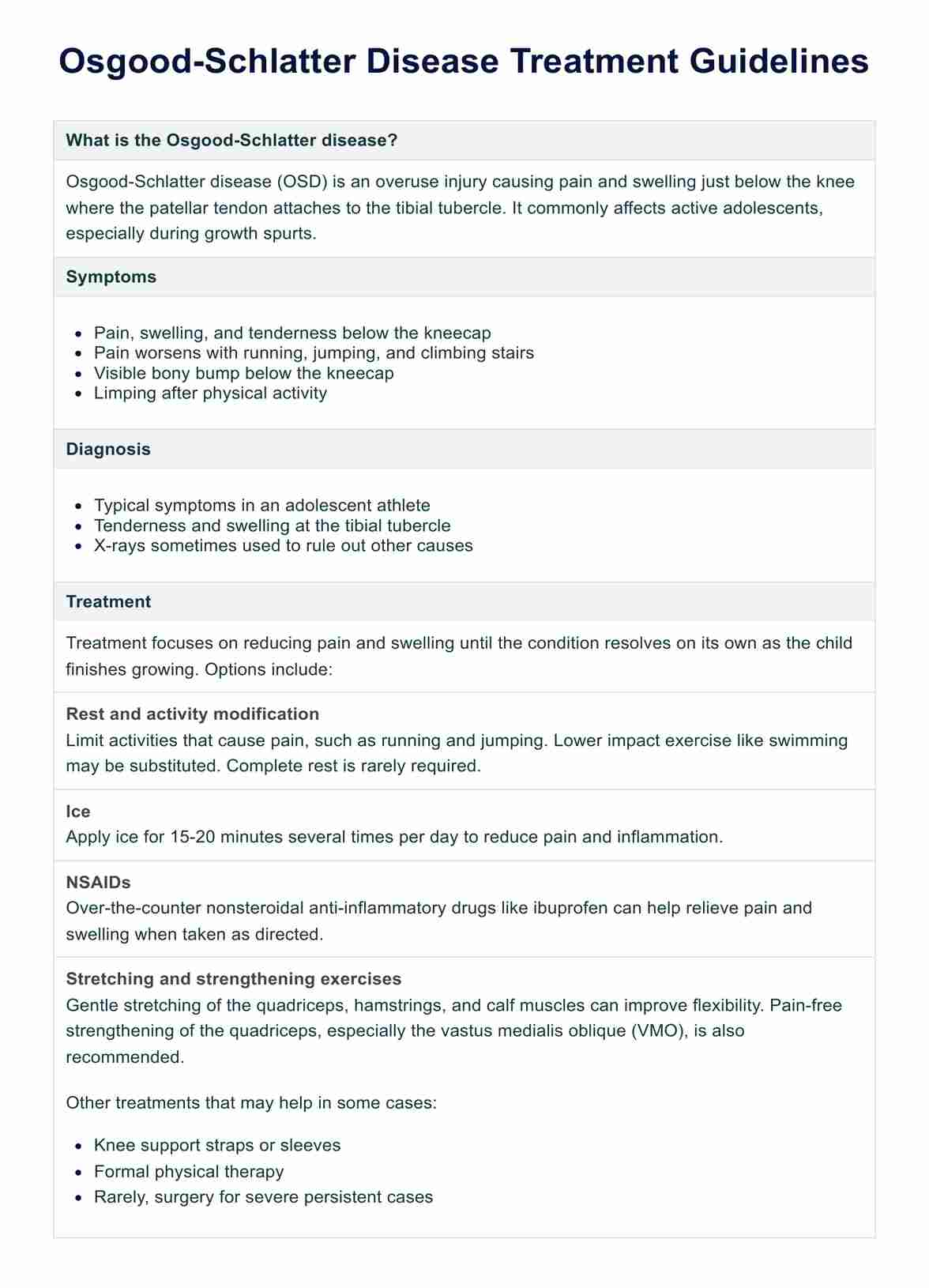




What is Osgood-Schlatter's disease?
Osgood-Schlatter disease is characterized by painful inflammation affecting children and adolescents at the juncture of their front thigh, kneecap (patella) and shin bone (tibia). Healthcare professionals also refer to it as jumper’s knee or growing pains.
This condition predominantly afflicts individuals still in their growth phase, particularly during a growth spurt. Such periods of rapid growth render various parts of a child’s body, including muscles, bones, ligaments, and tendons, more susceptible to stress and strain. While this growth is a natural and vital process, it can heighten the likelihood of irritation from repetitive, everyday stresses. Engaging in activities that heavily move leg muscles and involve the knees, such as frequent sports participation, can exacerbate this irritation, leading to pain and swelling.
Symptoms of Osgood-Schlatter disease
Symptoms of Osgood-Schlatter disease manifest in various ways, serving as indicators of the condition's presence. The main symptoms include:
- Pain, swelling, and tenderness below the kneecap
- Pain that worsens with running, jumping, and climbing stairs
- A visible bony bump below the kneecap
- Limping after physical activity
Causes of this disease
Osgood-Schlatter disease arises from repetitive strain on the patellar tendon and the tibial growth plate due to overuse, particularly during skeletal growth spurts. Contributing factors consist of:
- Participation in sports that entail running, jumping, and sudden directional shifts
- The age range is typically between 8 and 15 years
- Rapid growth spurts
- Tightness in the quadriceps and hamstring muscles
Diagnosis
Diagnosing Osgood-Schlatter disease usually involves looking for common symptoms in teenage athletes, such as knee pain and swelling, especially around the bump just below the knee. Doctors may also press on this area to check for tenderness. Sometimes, they might recommend X-rays to ensure there aren't any other reasons for the pain.









