





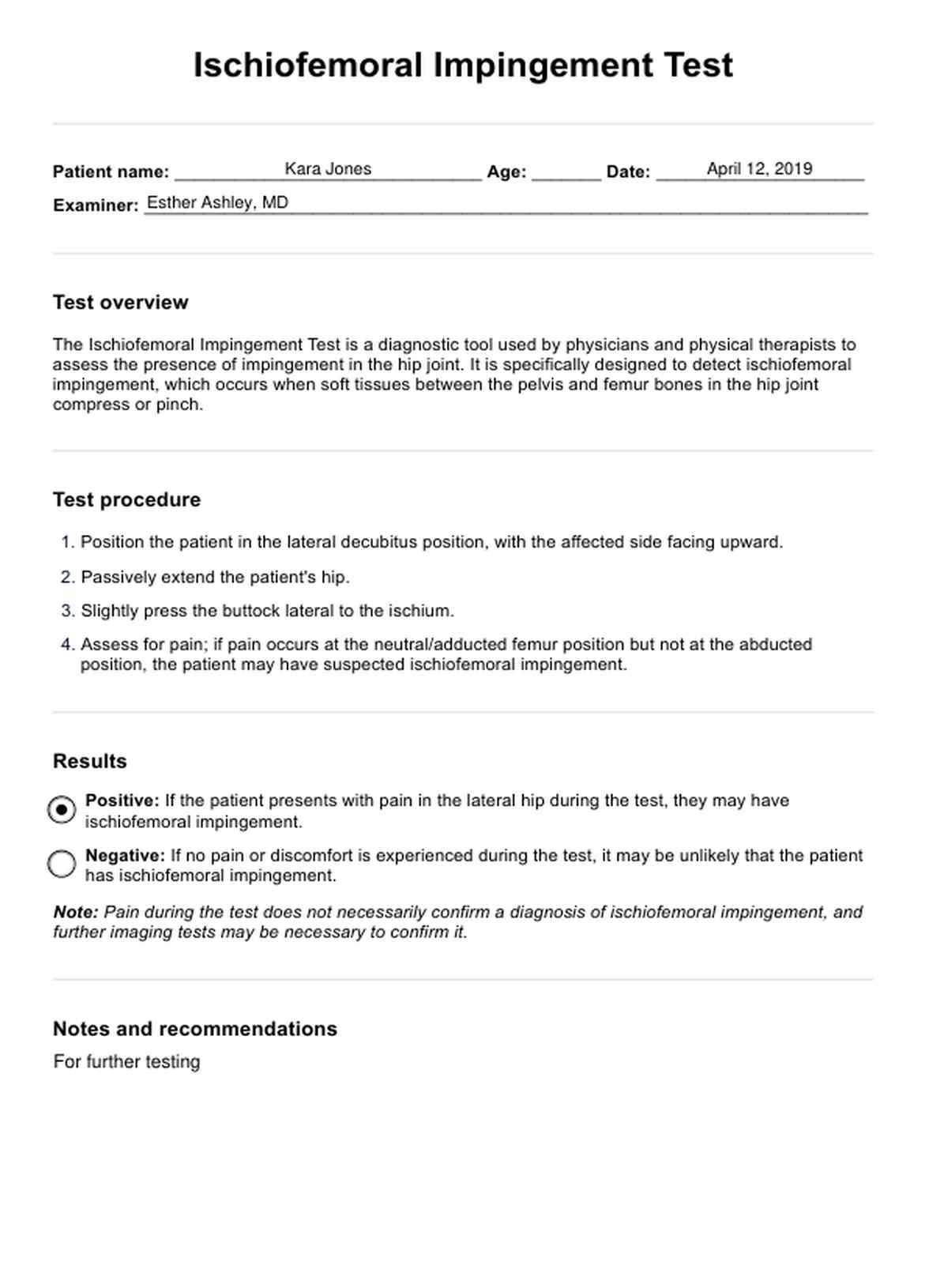




What is ischiofemoral impingement (IFI) syndrome?
Ischiofemoral impingement syndrome (IFI) occurs when the space between the ischial tuberosity (also known as the "sit bones") and the greater trochanter of the femur becomes too small. This can lead to compression or impingement of soft tissues, such as muscles and nerves, in this area.
IFI syndrome is also known by other names, such as posterior hip impingement syndrome, deep gluteal syndrome, and proximal hamstring tendinopathy. It is considered a relatively rare condition and often goes undiagnosed or misdiagnosed.
Symptoms of this syndrome
This syndrome manifests as posterior hip pain, which may radiate to the groin, buttock, or thigh. Patients often describe the pain as a deep, aching sensation that worsens with specific movements of the hip joint. The following are common symptoms associated with this syndrome:
- Persistent pain localized to the posterior hip, often exacerbated by hip extension, adduction, and external rotation.
- Pain that extends from the hip to the gluteal region, sometimes mimicking sciatica due to the proximity of the sciatic nerve.
- A sensation of snapping or clicking in the hip joint during movement, particularly during hip extension and adduction.
- Due to pain and discomfort, there is limited hip flexion, internal rotation, and external rotation.
- Discomfort extending to the groin area is often linked with hip impingement.
Causes of this syndrome
Key causes include:
- Structural abnormalities such as coxa valga and prominence of the lesser trochanter can predispose individuals to IFI.
- Previous hip surgeries, including total hip arthroplasty and proximal femoral osteotomy, can alter the alignment of the hip joint and lead to impingement. Trauma to the hip region can also cause similar changes.
- Weakness in the hip abductors, adductors, and other surrounding muscles can result in improper hip mechanics, increasing the risk of impingement.
- Activities involving repetitive hip extension and external rotation, such as running and dancing, can contribute to the development of this syndrome.
- Conditions such as hamstring tendon edema, iliopsoas tendon abnormalities, and quadratus femoris tendinitis can exacerbate the narrowing of the ischiofemoral space.









