





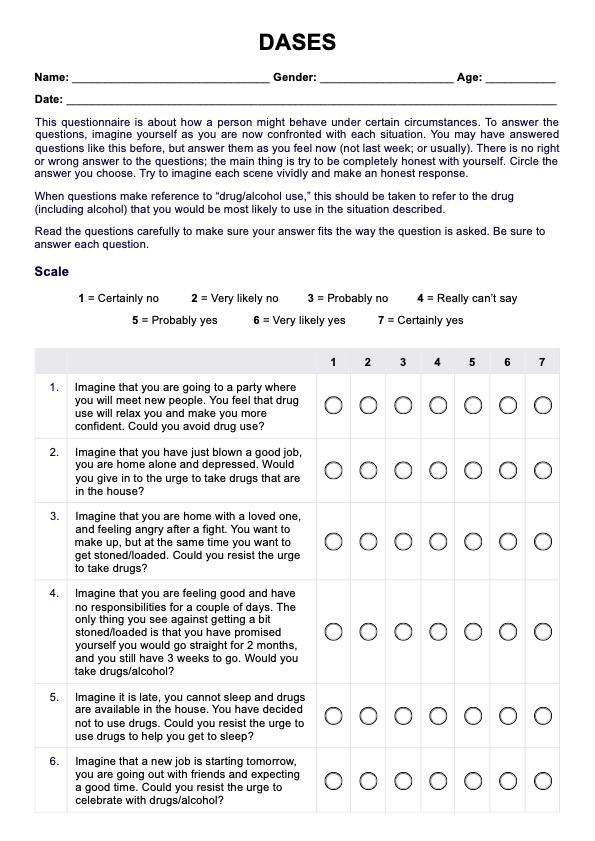




What is the Drug Avoidance Self-Efficacy Scale (DASES)?
The Drug Avoidance Self-Efficacy Scale (DASES) is a validated psychometric tool designed to measure an individual's confidence in resisting drug use in various situations. It is rooted in self-efficacy theory, which highlights the belief in one’s ability to manage challenging situations as a key factor in behavioral change. DASES is often used in addiction research institutes and clinical settings to assess individuals with substance use disorders or those exhibiting addictive behaviors.
Developed to provide insights into substance use behaviors, the scale is particularly effective among young multiple drug users, offering predictive value in determining the likelihood of subsequent drug use. The scale evaluates a person’s ability to avoid drug use when exposed to triggers like peer pressure, stress, or environments conducive to illicit drug use disorders.
DASES plays a critical role in mental health and therapeutic interventions that empower clients to enhance their self-efficacy. Its application in mental health nursing and addiction treatment supports practitioners in identifying areas where individuals may require additional support to achieve positive outcomes.
Through exploratory factor analysis, principal components analysis, and with high values in all the comparative indices, DASES has demonstrated reliability in capturing the multifaceted nature of drug avoidance across diverse populations (Martin, et al., 1995). The tool informs the design of tailored interventions and therapeutic interventions based on self-efficacy and empowerment. Ultimately, the DASES aids healthcare professionals in equipping clients with the skills and confidence needed to resist drug use and navigate high-risk situations successfully.









