









What is a Conflict Tactics Scale (CTS)?
The is a widely used research tool in psychology and social sciences to assess and measure the occurrence and severity of conflict and violence within intimate relationships. Developed by sociologist Murray A. Straus in the 1970s, the CTS provides a structured framework for examining the tactics employed by individuals during conflicts with their partners.
CTS aims to gather data and insights about the various strategies people use to address and resolve conflicts within their intimate relationships. It assesses a range of conflict-related behaviors, including negotiation, compromise, verbal aggression, physical aggression, and sexual coercion. By examining the frequency and severity of these behaviors, researchers can better understand the dynamics and patterns within relationships.
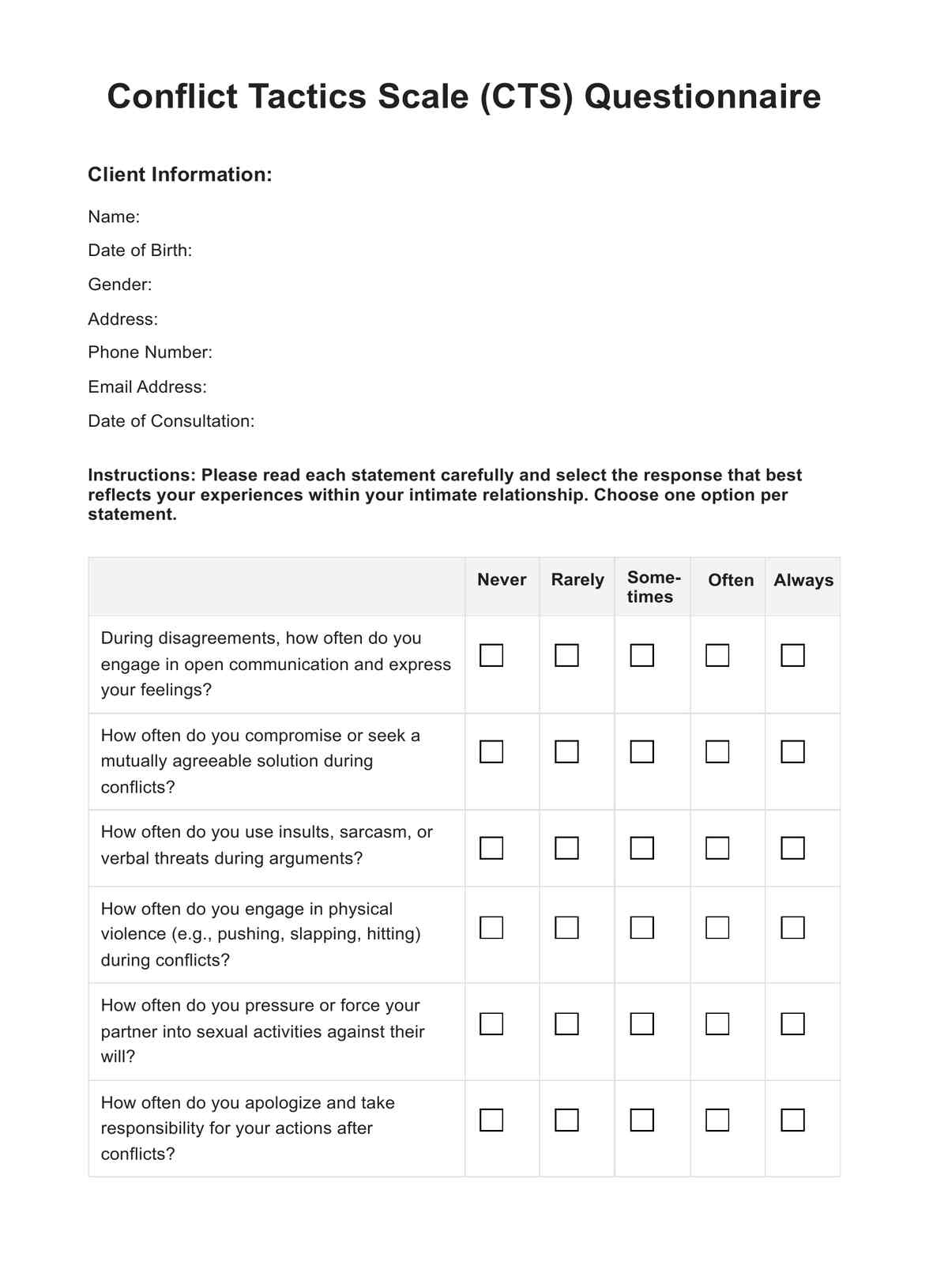
The CTS typically consists of a questionnaire that participants complete to self-report their experiences and behaviors related to conflicts with their partners. The questionnaire includes items that ask respondents to indicate the frequency of specific conflict tactics they have used or experienced and the intensity or severity of those behaviors.
Researchers and professionals use the CTS to gather empirical data about relationship dynamics, identify risk factors for violence, and evaluate the effectiveness of interventions and prevention programs. The scale has been employed in numerous studies across diverse populations and cultural contexts, allowing for cross-cultural comparisons and insights into the prevalence and impact of relationship conflict.
It is important to note that the CTS is a research tool and should not be used as a diagnostic tool or a means to justify or endorse violent behavior. Its purpose is to generate knowledge and facilitate discussions around conflict resolution strategies within intimate relationships, ultimately contributing to healthier and safer relationships.









