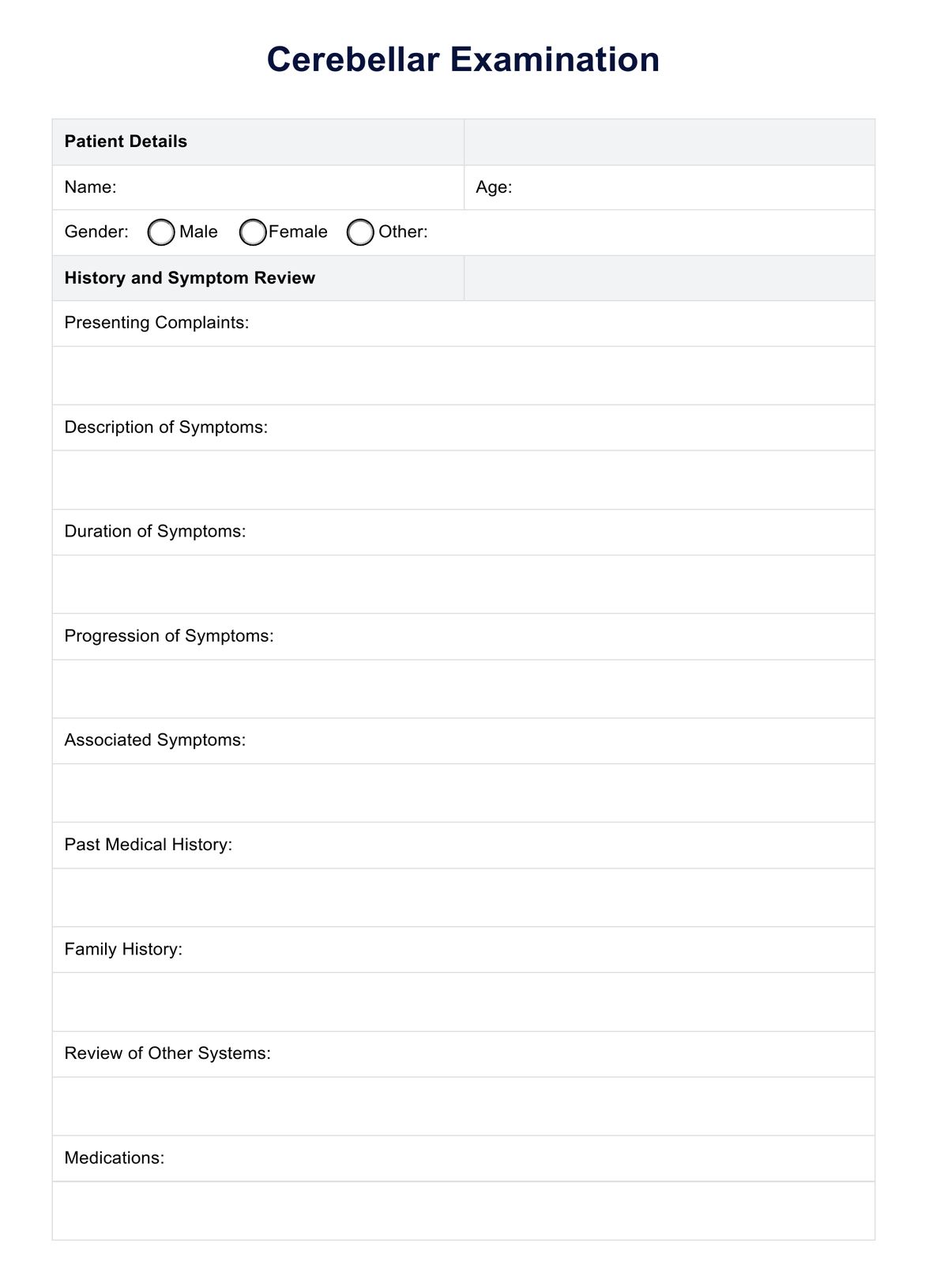
How does this Cerebellar Exam template work?
The Cerebellar Exam or cerebellar function test involves a series of precise tests, each formulated to assess a distinct cerebellum function, and is done through a well-defined, step-by-step process:
Step 1: Patient preparation
Proper preparation of the patient is essential before conducting the neurological examination. This stage involves thoroughly explaining the nature and purpose of the procedure to the patient and obtaining their informed consent, respecting their autonomy and right to participate actively in their care.
Step 2: Execution of tests
This step involves administering a series of cerebellar tests specially designed to assess the integrity and function of the cerebellar system. Each test targets a unique aspect of cerebellar functioning, ensuring a comprehensive evaluation of the patient’s neurological status. Here's a list of said tests and instructions on how to conduct them:
- Finger-to-nose test: Ask the patient to touch their nose with their fingertip and then reach out to touch the examiner’s index finger, which is moved to different positions. This test assesses coordination and the ability to perform controlled movements.
- Heel-to-shin test: Ask the patient to slide the heel of one foot up and down the shin of the opposite leg. This test evaluates the coordination of lower limb movements.
- Rapid alternating movements: Ask the patient to perform rapid, alternating hand movements, such as pronation and supination of the hands. This assesses the ability to coordinate rapid, repetitive movements.
- Gait analysis: Observe the patient’s walking pattern to assess balance and coordination. Patients with cerebellar dysfunction may exhibit an ataxic gait characterized by a wide support base and irregular steps.
- Impaired smooth pursuit: Ask the patient to follow a moving object with their eyes, such as a finger, and note any jerky or saccadic movements. This test assesses oculomotor disturbances commonly associated with cerebellar dysfunction.
You may also conduct additional tests to check the knee jerk reflex and evaluate muscle tone with the patient lying on the examination on an examination couch or bed.
Step 3: Interpretation
Once the tests are complete, healthcare professionals interpret the results. This critical stage involves analyzing the findings to identify signs of potential cerebellar dysfunction. The interpretative insights inform the direction of subsequent patient care.