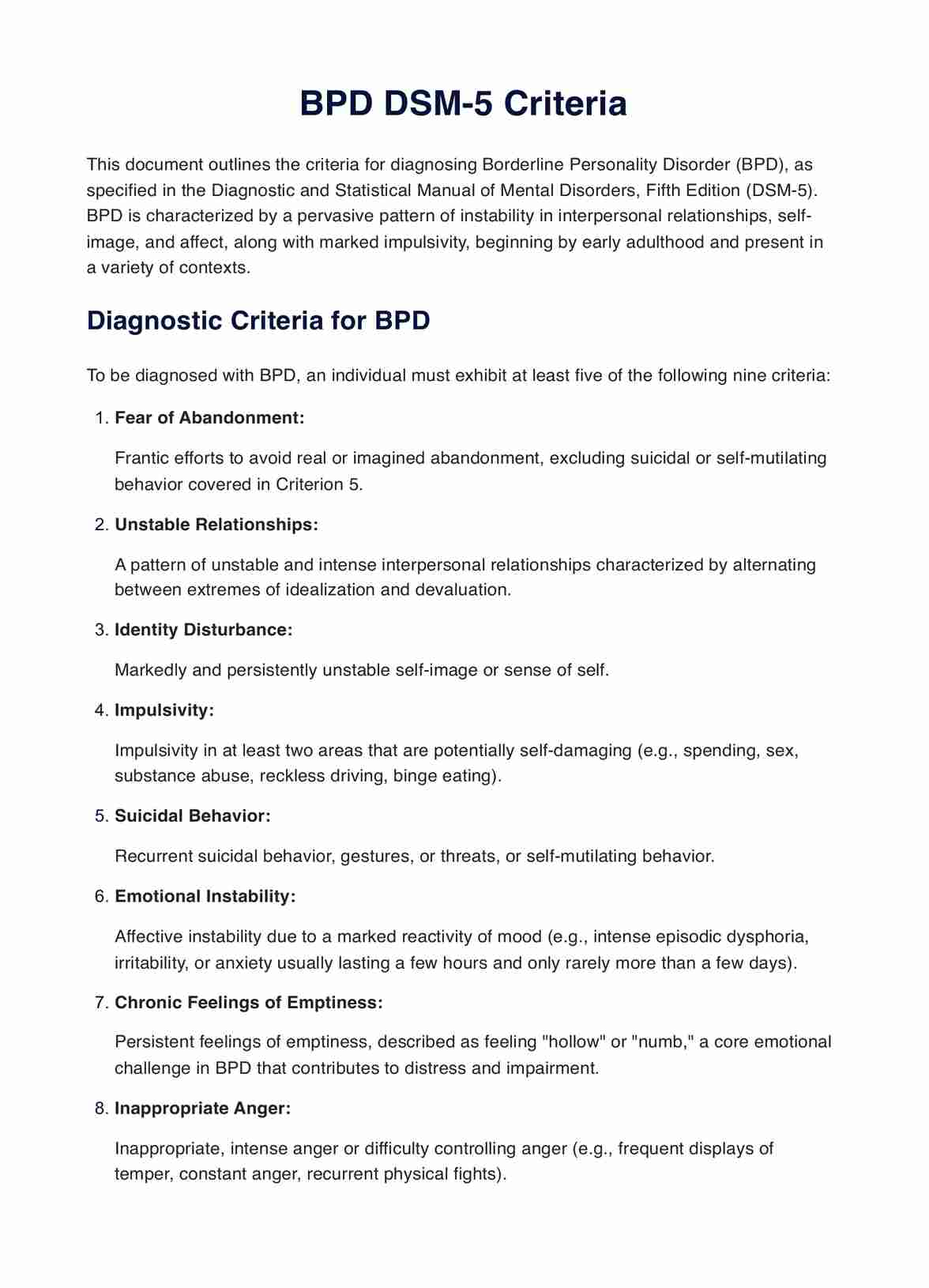
How do mental healthcare professionals diagnose this disorder?
Diagnosing Borderline Personality Disorder (BPD) is a meticulous process that mental health professionals undertake with precision and sensitivity. Here is a step-by-step overview of how this complex disorder is diagnosed based on the criteria outlined in the Diagnostic and Statistical Manual of Mental Disorders, Fifth Edition (DSM-5):
Step 1: Initial consultation
The process begins with an in-depth interview to gather a comprehensive history of the patient, including their current symptoms, life circumstances, medical history, and any previous mental health diagnoses or treatments.
Step 2: Symptom assessment
The mental health professional explores the range and intensity of symptoms the patient experiences, focusing on patterns of instability in relationships, self-image, and emotions, as well as instances of marked impulsivity. Questionnaires and psychological tests may be used to systematically assess symptoms and their impact on the patient’s life. These tools help differentiate BPD from other similar mental health conditions.
Step 3: Criteria matching
The professional reviews the specific criteria for BPD outlined in the DSM-5. A diagnosis of BPD requires that at least five of the nine criteria be met. These include patterns of unstable interpersonal relationships, identity disturbance, impulsivity, suicidal behavior, emotional instability, chronic feelings of emptiness, intense anger, transient, stress-related paranoid thoughts, or severe dissociative symptoms.
Step 4: Differential diagnosis
Distinguishing Borderline Personality Disorder (BPD) from other mental health disorders is a nuanced process that is essential for accurate diagnosis and effective treatment planning. The overlap of symptoms between BPD and disorders such as mood disorders, other personality disorders, and symptoms resulting from substance abuse requires a thorough evaluation. This evaluation entails an in-depth analysis of the patient's history, symptoms' manifestation, and consistency across various contexts.
According to the Diagnostic and Statistical Manual of Mental Disorders, Fifth Edition, Text Revision (DSM-5-TR), it is recognized that BPD can co-occur with several other disorders. Importantly, if the diagnostic criteria for BPD and another disorder are both met, concurrent diagnoses should be made. This underscores the complexity of mental health disorders and the importance of a comprehensive assessment by a healthcare professional.
In the differential diagnosis phase, it's critical to consider the full spectrum of mental health disorders, acknowledging the possibility of comorbidities, to tailor an appropriate and effective treatment plan for the individual.
Step 5: Assessing functioning and impact
The clinician assesses how BPD symptoms affect the patient's life, including relationships, work, and personal well-being. This helps to understand the severity and pervasiveness of the disorder.
Step 6: Consideration of context
Cultural, familial, and social backgrounds ensure that the diagnosis accurately reflects the individual's experiences and not just the presence of symptoms.
Step 7: Collaborative diagnosis
Diagnosis is a collaborative effort between the patient and the mental health professional. It involves open communication, with the professional explaining and clarifying the diagnostic process and criteria for borderline patients.
Step 8: Diagnosis and discussion
If the patient meets the criteria for BPD, the mental health professional will make the diagnosis and discuss it with the patient. This discussion includes an explanation of the disorder, its symptoms, and the criteria met.
Step 9: Treatment planning
Following the diagnosis, the professional and patient develop a comprehensive treatment plan. This plan may include psychotherapy, medication, and other support services tailored to the individual’s needs.
By following these steps, mental health professionals ensure that the diagnosis of BPD is accurate, comprehensive, and tailored to the individual’s unique circumstances. This careful process lays the groundwork for effective treatment and management of the disorder, providing hope and direction for those affected by BPD.