
An increase in the Pauwels angle indicates a higher likelihood of femoral neck fractures being unstable and therefore requiring surgical intervention. This angle is measured on imaging scans and can help guide treatment decisions for patients with femoral neck fractures.
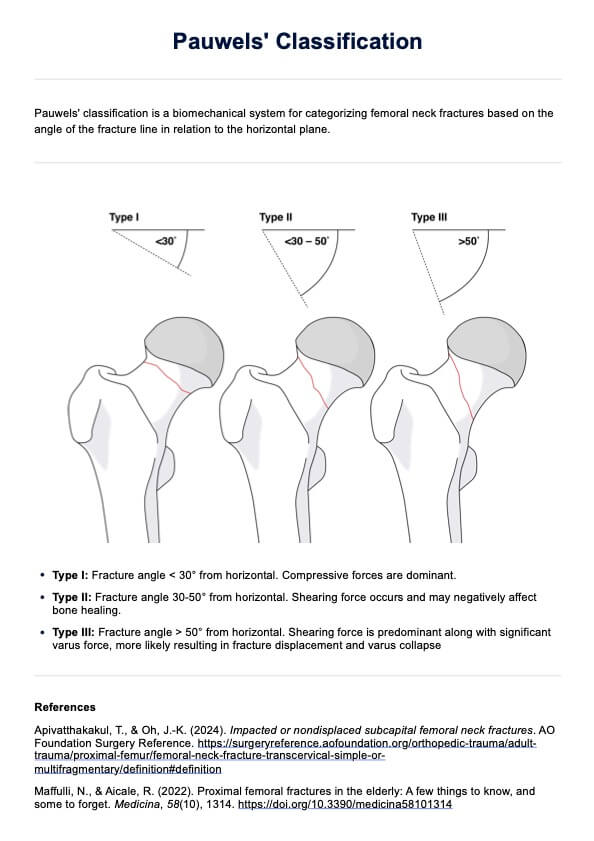



Pauwels' Classification
Learn how the Pauwels' Classification for femoral neck fractures works. Download a free PDF handout of this system for your practice here.

Use Template
Pauwels' Classification Template
Commonly asked questions
The Pauwels' Classification is a system used to classify femoral neck fractures based on the angle between the fracture line and the horizontal axis of the femoral shaft. It is divided into three types: Type I, where the fracture line is <30 degrees and considered stable; Type II, where the fracture line is 30-50 degrees and considered potentially unstable; and Type III, where the fracture line is >50 degrees and considered highly unstable.
Surgery for hip fractures typically involves internal fixation, dynamic hip screw or hemiarthroplasty, or total hip arthroplasty (THA), depending on the type and severity of the fracture.










EHR and practice management software
Get started for free
*No credit card required
Free
$0/usd
Unlimited clients
Telehealth
1GB of storage
Client portal text
Automated billing and online payments