
The most critical aspect is understanding serving size, as it affects your food's caloric and nutrient intake. Pay attention also to how much fat, how much sodium, and how much calories are listed per serving to gauge how the food fits into your daily needs. Additionally, check how many grams of key nutrients, like fiber or protein, are included to assess its nutritional value. This information helps you make healthier choices and avoid overconsumption of less desirable nutrients.
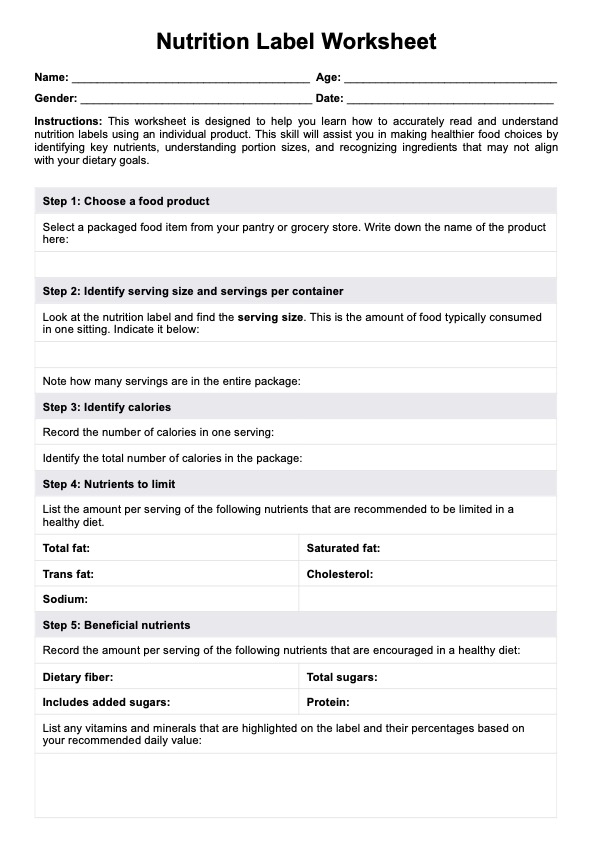



Nutrition Label Worksheet
Teach clients how to read nutrition labels and make healthy food choices. Get our Nutrition Label Worksheet for free.

Use Template
Nutrition Label Worksheet Template
Commonly asked questions
Reading and following nutrition labels helps consumers make informed dietary choices by revealing nutrient content and serving sizes. For example, an entire can of soup may contain multiple servings, doubling calories and sodium if consumed fully. Without this knowledge, individuals risk unhealthy nutrient intake. Understanding labels supports better decisions and a balanced diet.
Proper use involves checking serving sizes, calories, and nutrient content. One should minimize saturated fat, added sugars, and sodium intake while seeking foods high in dietary fiber, vitamins, and minerals.










EHR and practice management software
Get started for free
*No credit card required
Free
$0/usd
Unlimited clients
Telehealth
1GB of storage
Client portal text
Automated billing and online payments