
Nonstress Tests generally are ordered by healthcare providers, especially obstetricians, for various reasons. They are used to monitor high-risk pregnancies, assess the fetus's response to stress, and evaluate the effectiveness of treatments for conditions like intrauterine growth restriction (IUGR).
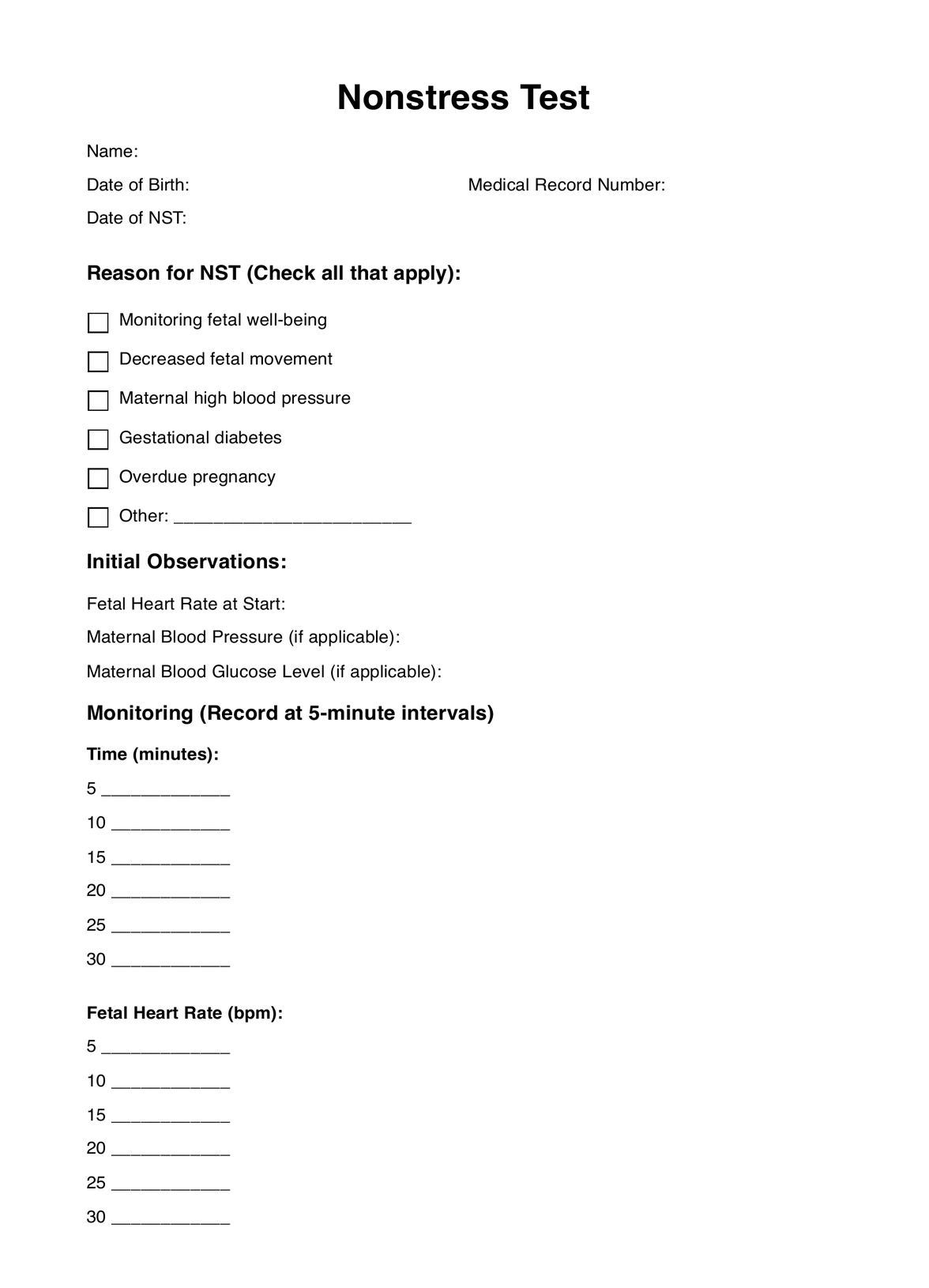



Nonstress
Learn about the Nonstress Test, a prenatal procedure to monitor fetal well-being. Find out how NST works, its significance, and what to expect.

Use Template
Nonstress Template
Commonly asked questions
Nonstress Tests can be conducted at any point during pregnancy, but they are most frequently employed in the third trimester. This preference arises because, after 28 weeks of gestation, the fetus's heart rate is more likely to exhibit responsiveness to movement.
Nonstress Test is a non-invasive procedure that uses two external monitors to track the fetus's heart rate and activity. The monitors are attached to the mother's abdomen, and the fetus's heart rate is recorded.










EHR and practice management software
Get started for free
*No credit card required
Free
$0/usd
Unlimited clients
Telehealth
1GB of storage
Client portal text
Automated billing and online payments