
Recognizing damage to the nerve involves noting specific symptoms such as loss of taste on the posterior part of the tongue, swallowing difficulties, unexplained throat or ear pain, changes in voice, decreased salivation, and potential changes in heart rate and blood pressure. A healthcare professional can diagnose damage through clinical examinations, neurological tests, imaging like MRI or CT scans, and electrophysiological tests.



Glossopharyngeal Nerve Test
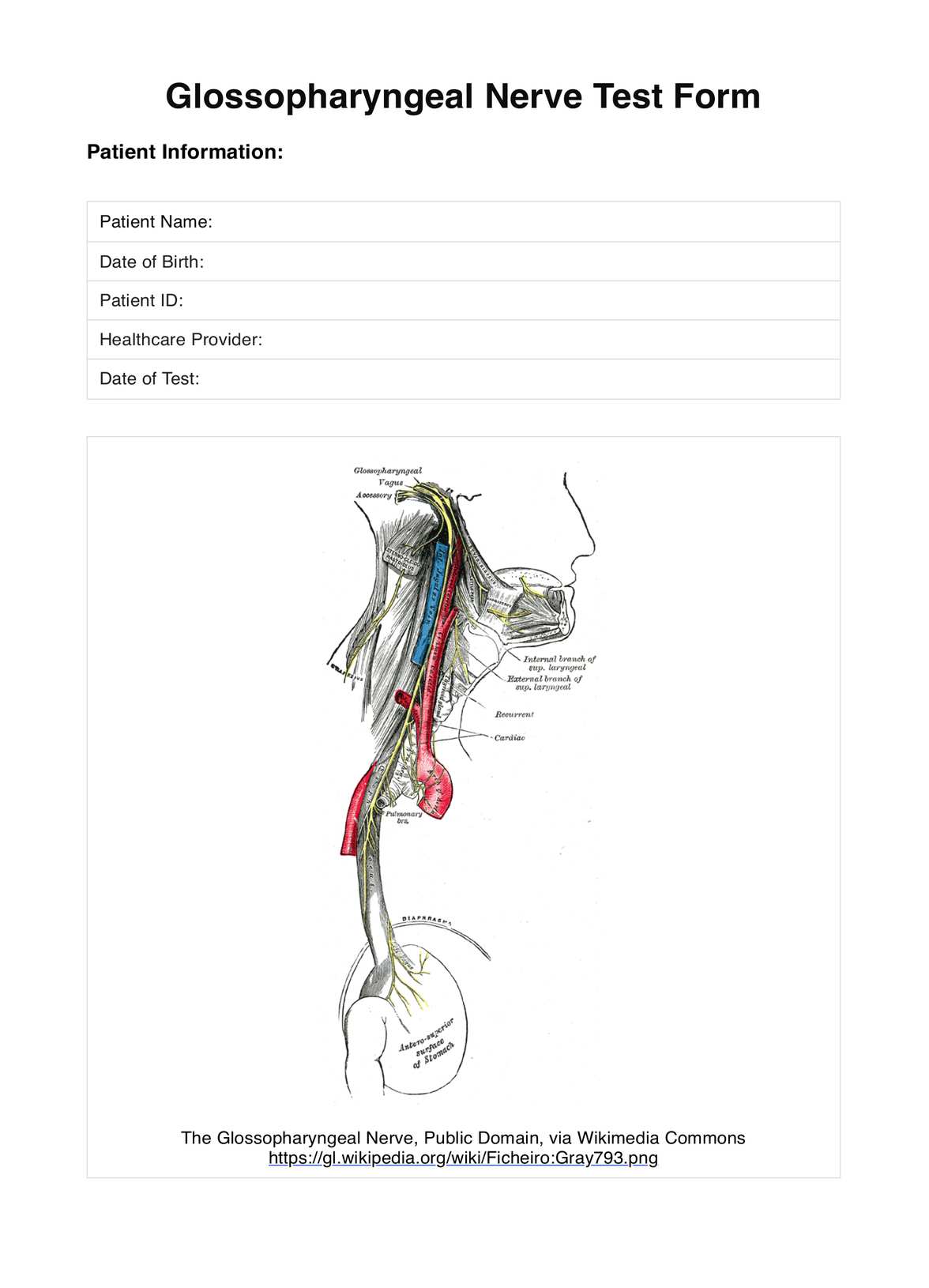
Discover how to assess the glossopharyngeal and vagus nerves with our guide. Learn key symptoms, tests for gag reflex, and more in our free PDF download.
Use Template
Glossopharyngeal Nerve Test Template
Commonly asked questions
A nurse assesses the nerve by preparing the patient and visually inspecting for oropharyngeal asymmetry or abnormalities. Swallowing ability and gag reflex are directly tested, noting any difficulties or absence of response. Sense of taste in the tongue may also be evaluated if practical. Observations should be documented and reported for further evaluation.
Testing cranial nerves IX (Glossopharyngeal) and X (Vagus) starts with a visual inspection for asymmetry in the uvula or soft palate movement. The gag reflex, elicited by gentle throat stimulation, assesses sensory (IX) and motor (X) responses.
Swallowing ability, speech quality, and the rise of the soft palate during phonation provide further insight into nerve function. For detailed methodologies or procedures for testing each nerve's function, including sensory and motor assessments, check out our Cranial Nerves Test Template.










EHR and practice management software
Get started for free
*No credit card required
Free
$0/usd
Unlimited clients
Telehealth
1GB of storage
Client portal text
Automated billing and online payments