
Yes, the DSM-5 is considered a reliable and standardized framework for diagnosing autism spectrum disorder (ASD) when used by trained professionals. It provides clear, evidence-based diagnostic criteria that help differentiate ASD from other communication or behavioral disorders. However, accuracy also depends on clinical expertise, thorough developmental history, and the use of complementary tools such as structured interviews and observation scales.
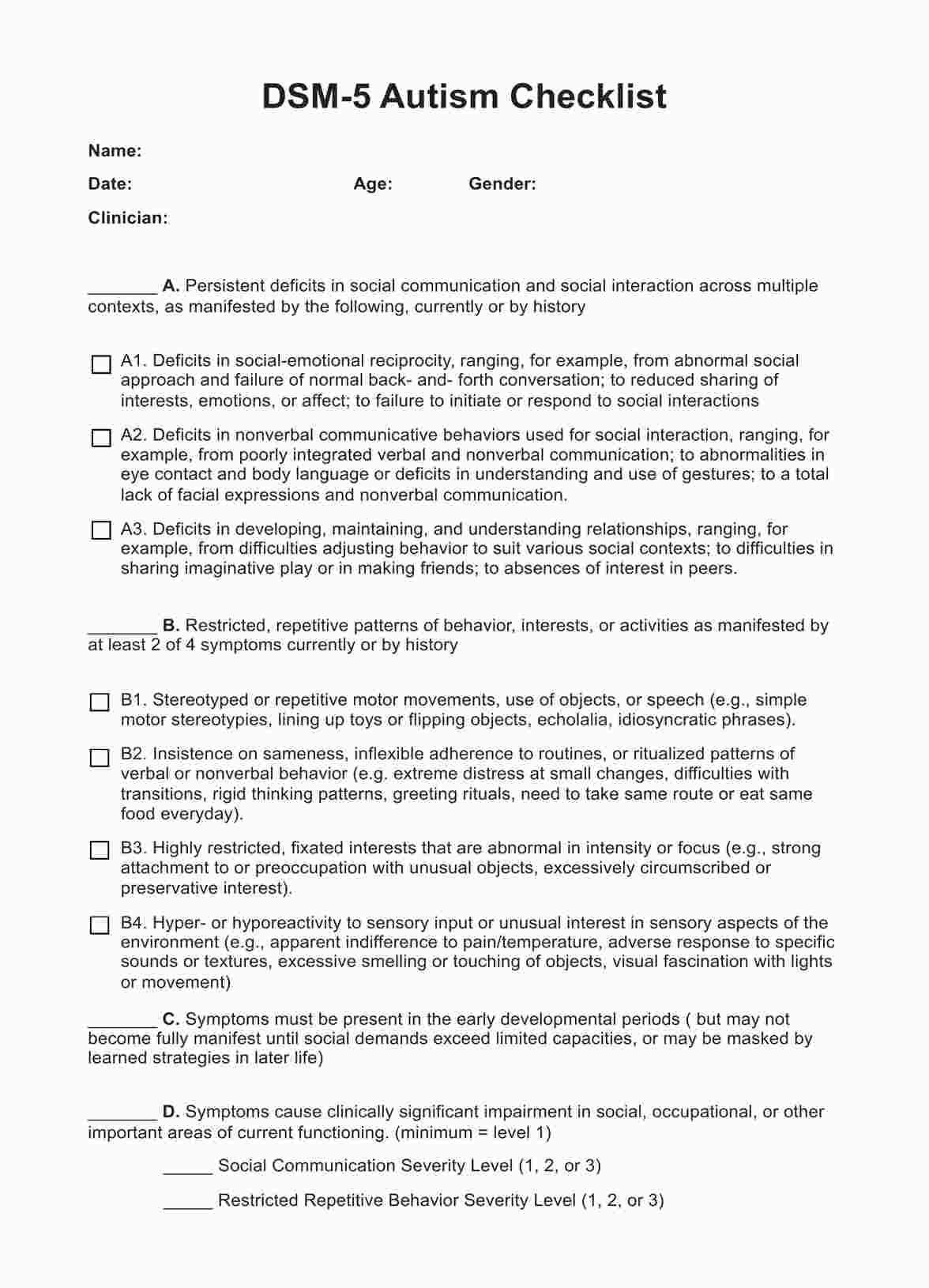



DSM 5 Autism Criteria Checklist
Download our free DSM-5 Autism Criteria Checklist to support accurate autism assessment, diagnosis, and clinical documentation.

Use Template
DSM 5 Autism Criteria Checklist Template
Commonly asked questions
Diagnosing autism involves a multidisciplinary approach that combines developmental screening, behavioral observation, and caregiver interviews. Clinicians assess verbal and nonverbal communication, social-emotional reciprocity, and restricted or repetitive patterns of behavior in line with DSM-5 criteria. Additional assessments—like cognitive testing or evaluations for accompanying intellectual or language impairments—help create a complete picture of the individual’s strengths and challenges.
Autism does not develop after age five, as the DSM-5 defines it as a neurodevelopmental disorder with symptoms present during the early developmental period. Some children, however, may not receive a diagnosis until later because their early signs were subtle or masked by higher cognitive or language skills. In such cases, increased social communication demands or academic challenges can make previously unnoticed symptoms more apparent.










EHR and practice management software
Get started for free
*No credit card required
Free
$0/usd
Unlimited clients
Telehealth
1GB of storage
Client portal text
Automated billing and online payments