
Distal radioulnar joint (DRUJ)instability is typically classified into three grades: mild (Grade 1), where there is slight laxity without pain; moderate (Grade 2), which includes noticeable laxity with mild pain; and severe (Grade 3), characterized by significant laxity, pain, and loss of function. These grades help in determining the severity of the instability and guiding treatment.
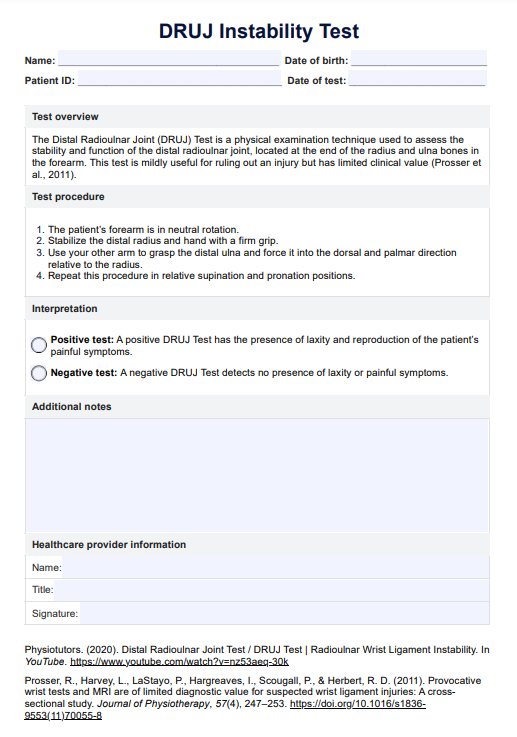



DRUJ Instability Test
Learn all about DRUJ Instability Test, its importance, and how it is conducted. Download Carepatron free PDF guide for easy reference.

Use Template
DRUJ Instability Test Template
Commonly asked questions
The distal radioulnar joint (DRUJ) is the joint between the distal end of the radius and the ulna in the forearm. It allows for the rotation of the forearm, enabling movements like pronation and supination.
Fixing a distal radioulnar joint (DRUJ) injury often involves a combination of physical therapy, bracing, and, in severe cases, surgical intervention such as ligament repair or ulnar shortening osteotomy. The treatment plan is tailored based on the severity of the instability and the underlying cause.










EHR and practice management software
Get started for free
*No credit card required
Free
$0/usd
Unlimited clients
Telehealth
1GB of storage
Client portal text
Automated billing and online payments