
Because Type C fractures occur above the syndesmosis, where they frequently cause a major disruption in the ankle joint's stability, they are regarded as more serious than Type A or B fractures. Type C fractures often requiring more complex surgical intervention
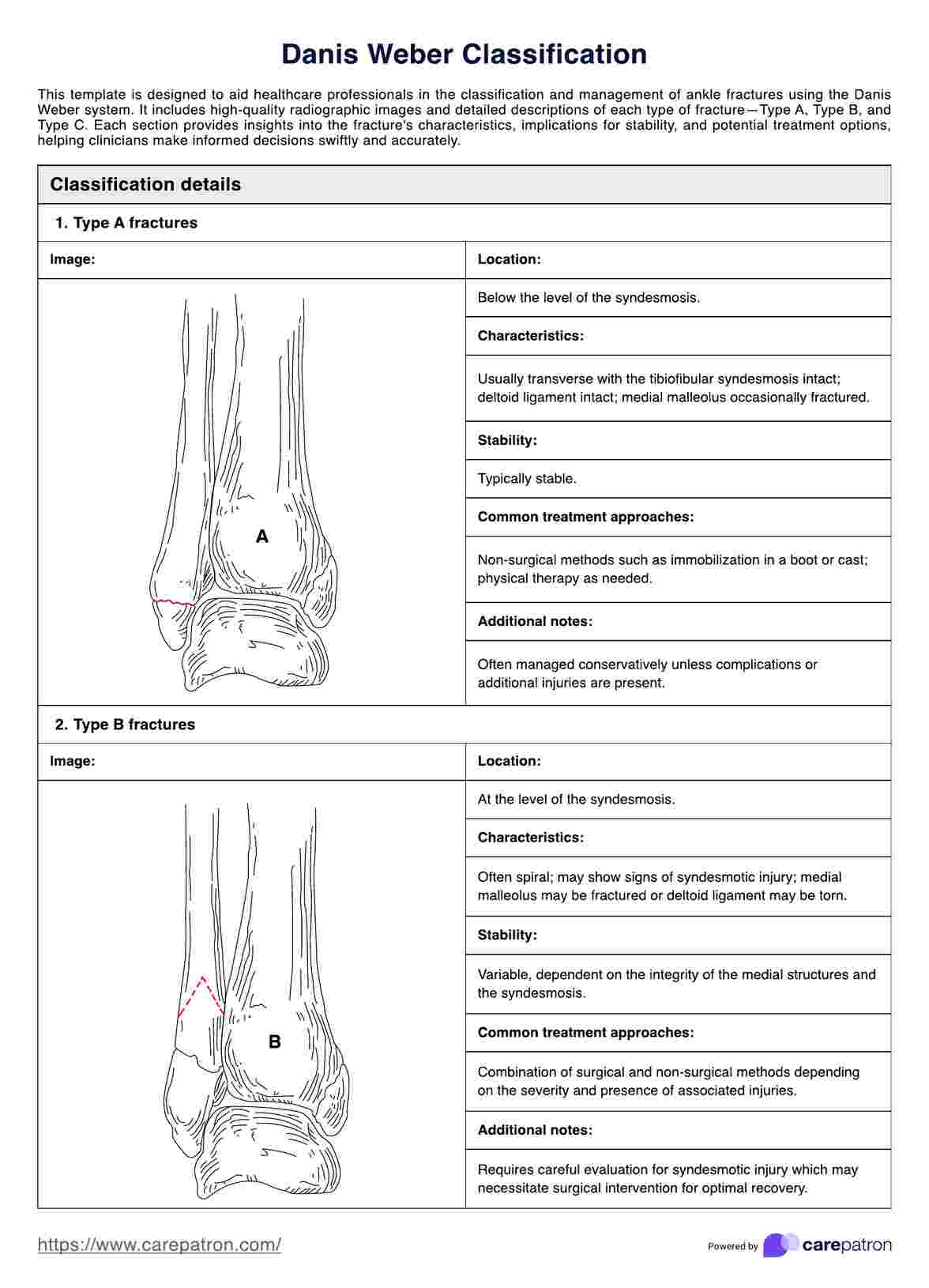



Danis Weber Classification
Explore the Danis Weber Classification system for ankle fractures. Understand lateral ankle fracture types, symptoms, causes, and treatments. Download our free PDF template.

Use Template
Danis Weber Classification Template
Commonly asked questions
The Danis Weber Classification helps predict ankle fracture mechanism by assessing their location relative to the syndesmosis. It estimates the fracture's stability and the likelihood of complications, which is crucial for planning treatment and advising patients on recovery expectations.
The Danis Weber Classification guides treatment based on the fracture’s proximity to the syndesmosis. Type A fractures usually need conservative treatments such as immobilization, while Type B may need surgery depending on ligament damage. Type C fractures require surgical intervention to address instability.










EHR and practice management software
Get started for free
*No credit card required
Free
$0/usd
Unlimited clients
Telehealth
1GB of storage
Client portal text
Automated billing and online payments