
The Alkaline Phosphatase (ALP) Level Chart is a diagnostic tool used to interpret ALP levels obtained from a blood test. This chart helps determine whether ALP levels are within the normal range, elevated, or low, providing critical insights into possible liver or bone conditions. ALP levels are often evaluated during a routine liver panel or as part of a comprehensive metabolic panel to assess health conditions like liver disease or bone disorders. By comparing test results against the chart’s reference range for normal ALP levels, healthcare providers can identify abnormal levels that may indicate the need for further evaluation.
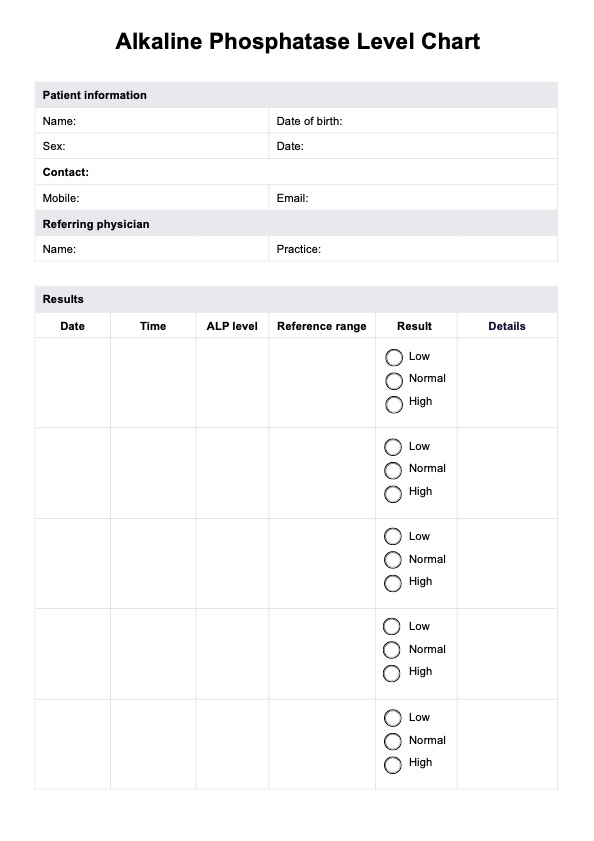



Alkaline Phosphatase Level
Download our Alkaline Phosphatase (ALP) Level Chart to document and track your patients' ALP levels effectively.

Use Template
Alkaline Phosphatase Level Template
Commonly asked questions
The alkaline phosphatase ALP test measures the level of ALP in your blood, an enzyme found in the liver, bones, and other body tissues. It is commonly included in liver function tests and helps diagnose liver problems, bone diseases, or other health issues such as bile duct blockages. Elevated alkaline phosphatase levels may signal liver diseases or bone disorders, while low alkaline phosphatase levels might indicate conditions like pernicious anemia or a rare genetic disorder. Accurate interpretation of the test results is essential for identifying underlying illnesses and guiding the diagnostic process.
Several factors can affect ALP levels, including recent consumption of a fatty meal, pregnancy, or certain medications. Elevated ALP levels can result from bone growth, liver or bone disorder, or conditions affecting the bile ducts. Conversely, low alkaline phosphatase levels are often associated with issues like malnutrition or a rare genetic disease affecting bone mineralization. Understanding the patient’s medical history, other blood tests, and any symptoms such as bone pain or unexplained weight loss is crucial for accurately interpreting abnormal ALP levels.










EHR and practice management software
Get started for free
*No credit card required
Free
$0/usd
Unlimited clients
Telehealth
1GB of storage
Client portal text
Automated billing and online payments